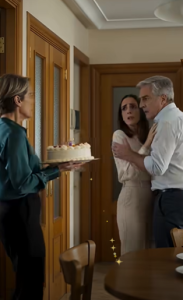
Celeste looked angry.
Then Maren spoke.
“Julian is right.”
Celeste turned.
Even Julian looked surprised.
Maren sat.
Three years had passed.
Juniper was no longer a foster dog waiting for reassessment.
He had a home.
Routine.
People.
Then Celeste said:
“But Maren, they took your dog.”
Maren’s face tightened.
“Don’t turn this into possession.”
That stopped her.
Maren had wanted Juniper back three years ago.
Desperately.
If she had known Julian signed, she would have fought.
Maybe successfully.
But three years later, insisting on return would not restore the past.
It would create another disruption.
They needed information first.
How was Juniper?
Who were the Parkers now?
Did they have children?
Did they even want contact?
Then Zaphirae asked from the doorway:
“Does he remember me?”
Nobody knew.
Julian crouched.
“Maybe.”
Wrong answer?
Not exactly.
Honest.
“Dogs can remember people.”
“But we don’t know what Juniper remembers.”
Zaphirae hugged the collar.
“I remember him.”
“I know.”
Then Celeste looked at her niece.
For the first time, she understood something she had avoided.
Zaphirae had spent half her life believing her mother chose to remove something she loved.
Celeste had helped build that belief.
“I told you something unfair about Mommy.”
Zaphirae looked at her.
“What?”
“I said Mommy was the person who decided Juniper had to go.”
“She agreed he needed temporary care.”
“But Daddy made the permanent decision.”
“And I helped him.”
Zaphirae frowned.
“Why?”
Celeste looked at Julian.
Then answered for herself.
“I thought Juniper was happier.”
“That part may still be true.”
“But I also thought it would be easier if everybody believed the decision was Mommy’s.”
Maren stared.
Celeste continued.
“Because people already understood why a mother with a little child might rehome a dog.”
“If we said Daddy did it against Mommy’s wishes, then people would know we made a family decision badly.”
There.
Social plausibility.
A mother overwhelmed by dog and toddler was a story nobody questioned.
So they used it.
Not consciously at first.
Eventually consciously enough.
Then Celeste said:
“I’m sorry.”
Zaphirae looked at her.
“Can you get Juniper?”
Celeste’s eyes filled.
“No.”
“I can help Daddy contact his family.”
“But I can’t promise they’ll let us see him.”
Zaphirae looked angry.
“He’s ours.”
Maren responded carefully.
“He used to live with us.”
“That is true.”
“He lives with them now.”
The child began crying again.
No adult corrected her feeling.
The truth was not supposed to make everything feel fair immediately.
Chapter 5: THE PARKERS HAD A DAUGHTER NOW
Julian contacted the rescue organization first.
Not the Parkers.
He needed records.
The coordinator who handled the original transfer no longer worked there.
A current manager reviewed the file.
Her conclusion was uncomfortable.
The organization had followed its own recorded ownership information.
Julian was listed as primary legal adopter.
Maren’s signature had been required for temporary foster because she was a household caregiver, not because the rescue had recorded her as co-owner.
So legally, Julian may have had authority to approve permanent transfer alone.
Maren listened.
“That makes it legal?”
“Possibly.”
Julian nodded.
“Doesn’t make it fair.”
Good.
The organization acknowledged the communication should have been clearer.
Especially because the temporary foster agreement included both adults.
But there was no secret conspiracy.
No falsified signature.
No stolen dog.
A husband with technical authority made a unilateral decision inside a marriage.
Legality and trust were separate questions.
Then Julian asked permission to contact the Parkers.
The rescue reached them first.
Two days later, Lila Parker called.
Her voice was cautious.
“Is something wrong?”
Julian said:
“No.”
Then corrected himself.
“There was something wrong in how Juniper’s placement was decided.”
He explained.
Not every marital detail.
Enough.
Then:
“My daughter recently learned Juniper is alive.”
Silence.
Lila sounded immediately softer.
“How old is she now?”
“Six.”
“She was tiny.”
“Yes.”
Then Lila told them about Juniper.
He was eight now.
Gray beginning around his muzzle.
Still hated thunder.
Loved sunlit floors.
Slept beside Daniel’s desk.
Had developed an obsession with carrots.
Zaphirae listened from across the room.
Smiled at the carrots.
Then Lila said:
“We have a daughter now.”
Everyone became quiet.
Her name was Emma.
Four years old.
Juniper adored her.
The irony hit Maren first.
Three years earlier, everyone believed Juniper needed a child-free home.
Now he lived with a young child.
Did that mean the original rehoming had been unnecessary?
Not automatically.
Time mattered.
Training mattered.
Juniper had been settled for years before Emma was born.
The Parkers introduced them gradually.
Different dog.
Different household.
Different circumstances.
Still, Julian felt something twist.
Lila heard it.
“I know what you’re thinking.”
“I’m not sure I do.”
She explained.
“If someone had told me three years ago he would eventually live happily with a child, I would not have believed them either.”
Juniper had changed.
So had they.
Then came the hardest question.
Could Zaphirae visit?
Lila hesitated.
Not because she was cruel.
Because Emma believed Juniper was simply their dog.
She did not know his earlier family history.
A sudden reunion with people calling him “ours” could confuse a four-year-old too.
Maren understood immediately.
“Please don’t tell Emma anything yet.”
Lila sounded relieved.
“Thank you.”
They agreed to think.
No surprise visit.
No emotional video call.
No sending old photographs directly to the child.
Then Zaphirae whispered:
“She gets Juniper.”
Maren looked at her.
“Yes.”
“That’s not fair.”
No adult answered with:
Life isn’t fair.
Too easy.
Julian said:
“I understand why it feels that way.”
Then Zaphirae asked:
“Did she take him?”
“No.”
Important.
“Emma did not take anything from you.”
“She was not even born when Juniper went there.”
Zaphirae looked down at the collar.
The family had found a new danger.
Correcting one false blame could create another.
They would not let that happen.