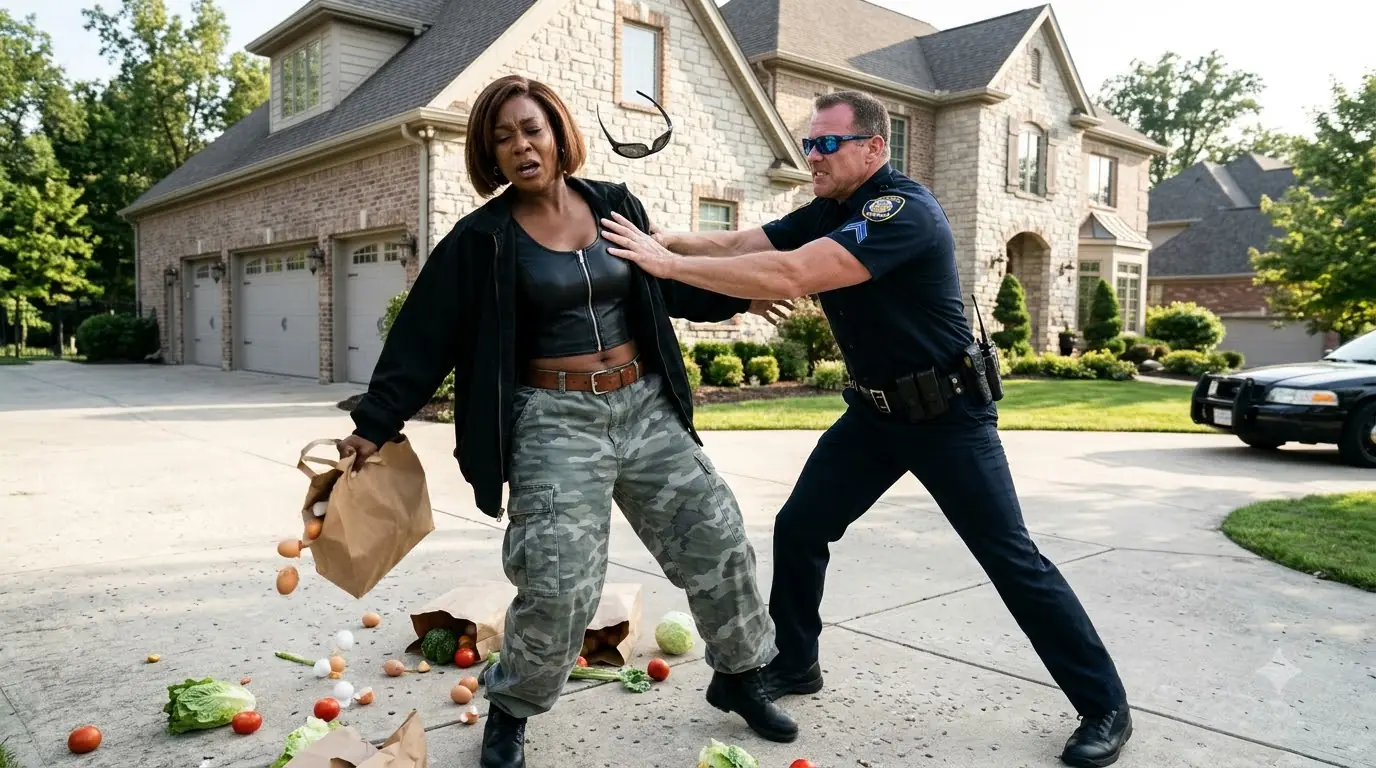
He had stepped in that day.
He returned the cane, spoke to the girls, and submitted a written incident report.
The following morning, he received a message from the principal’s office.
He was told that the matter had already been addressed.
He was also instructed to avoid intervening in future situations involving those particular students unless there was an immediate physical emergency.
Daniel had questioned the instruction.
The response had been simple.
Their families were major contributors to the school.
The administration wanted to prevent misunderstandings from becoming formal disciplinary matters.
Daniel told me he had been uncomfortable with the arrangement from the beginning.
But he had worked at Ridgeway for eleven years.
His wife was recovering from surgery, and his salary covered most of their household expenses.
He had convinced himself that reporting incidents to the office was enough.
“I thought the principal would handle it,” he said.
I looked at him.
“And when you saw her approaching the staircase?”
He closed his eyes briefly.
“I should have stepped forward.”
“Yes,” I replied.
“You should have.”
He didn’t argue.
I asked whether he had submitted any other reports.
He nodded.
“Three.
Maybe four.”
“Where are they?”
“Some are in the school system.
But I don’t know what happened to them.”
He opened a drawer and removed a thin folder.
Inside were several printed copies of incident reports, each with a date, a brief description, and the names of the students involved.
Some had handwritten notes in the margins.
One had a red stamp reading RESOLVED.
Another had a note indicating that the incident had been classified as a disagreement between students.
I turned the pages slowly.
The reports described the same pattern.
The cane being moved.
Nora being left without assistance.
The girls laughing.
Nora asking for help.
And the school repeatedly treating the incidents as minor misunderstandings.
“What happened to the original reports?”
Daniel looked uncomfortable.
“Some disappeared from the system after they were closed.”
I raised my eyes.
“Disappeared?”
“Not exactly deleted, perhaps.
I don’t know how the records were managed.
But when I searched for them later, several weren’t there anymore.”
I placed the folder on the desk.
“Why did you keep these copies?”
He looked toward the monitor.
“Because I knew someone might eventually ask.”
There was something in his answer that made me pause.
I had arrived at Ridgeway that morning to investigate a series of complaints concerning student safety and accessibility.
My assignment came from the district’s independent oversight office, which had received several reports suggesting that the school’s internal complaint process was not functioning properly.
The administration knew an external review was scheduled.
What it didn’t know was exactly which incidents I would examine or when I would arrive.
I had deliberately spent the first part of the morning walking through the building before meeting the principal.
I wanted to see how the school operated when people weren’t preparing for an official visit.
Now I understood why the distinction mattered.
I turned toward Daniel.
“Did you know I was coming today?”
He nodded.
“I saw your identification when you entered the hallway.”
“But you didn’t know what I was investigating.”
“No.”
He hesitated.
“Actually, I hoped you would look at the staircase camera.”
I stared at him.
“Why?”
He opened the folder again and removed a small envelope.
Inside was a printed email.
The message had been sent from Dr.
Halden’s administrative account to several members of the school staff.
It contained a short instruction concerning student disputes involving families who provided significant financial support to the school.
The wording was careful, but its meaning was unmistakable.
Staff members were instructed to report such incidents to the administration and avoid direct involvement unless immediate intervention was required for physical safety.
The message also emphasized that unnecessary escalation could damage relationships with important school supporters.
I read it twice.
Then I looked at Daniel.
“Did you send this to the district?”
He nodded.
“Anonymously.”
“When?”
“About two months ago.”
The room went quiet.
He explained that he had initially been afraid to report the instruction.
He had worried that the principal would discover where the complaint originated.
But after another incident involving Nora, he had decided that keeping silent was no longer something he could justify.
He had copied the email, preserved the incident reports, and submitted them through the district’s confidential reporting channel.
He had also identified the location of the staircase camera.
I looked at the date on the envelope.
It was several weeks before my assignment to Ridgeway.
Daniel had been the anonymous source whose report brought me to the school.
The man I had just watched standing motionless in the hallway had been trying, in his own imperfect way, to expose what was happening.
But that didn’t erase his failure to act.
“You did the right thing by reporting this,” I told him.
“But you also had an opportunity to help Nora directly.
You cannot pretend those two things cancel each other out.”
He nodded slowly.
“I understand.”
I gathered the documents.
“Then we’ll make sure both parts of the truth are included.”
We returned to the principal’s office.
Dr.
Halden was waiting with the two girls and another administrator.
The girls had been seated near the window, while the principal stood beside his desk.
He looked irritated when he saw the folder in my hands.
“I assume you’ve reviewed the footage.”
“Yes.”
“And I trust you’ve understood the context.”
“I’ve reviewed the footage, the incident reports, and your written instruction to staff.”
His expression changed.
For the first time that morning, he seemed unable to find an immediate response.
He reached for the document I placed on his desk.
“That’s an internal administrative communication.”
“It’s an instruction that discouraged staff from responding to repeated reports involving students from donor families.”
“That is not what it says.”
“Then perhaps you can explain what it means.”