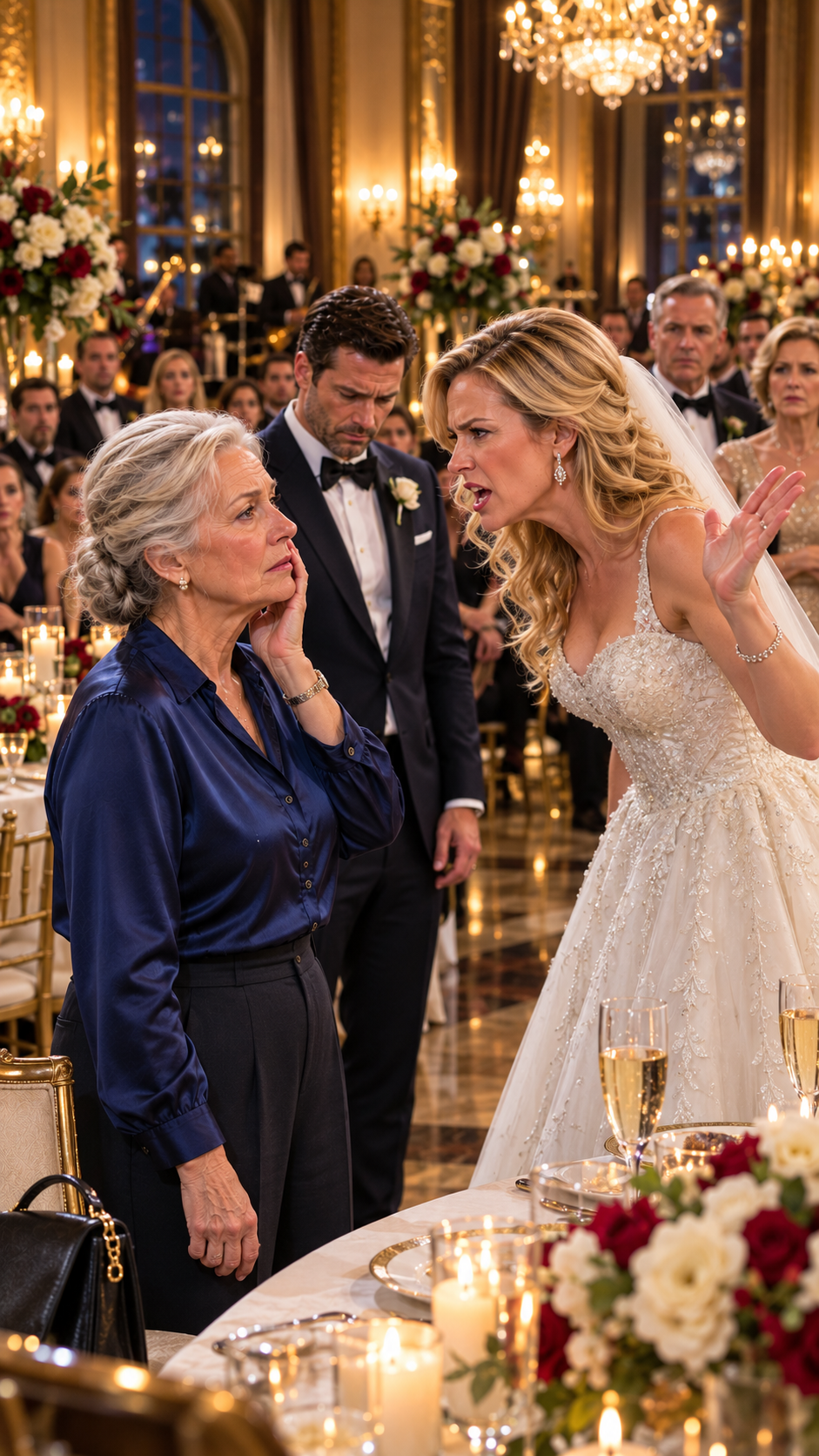
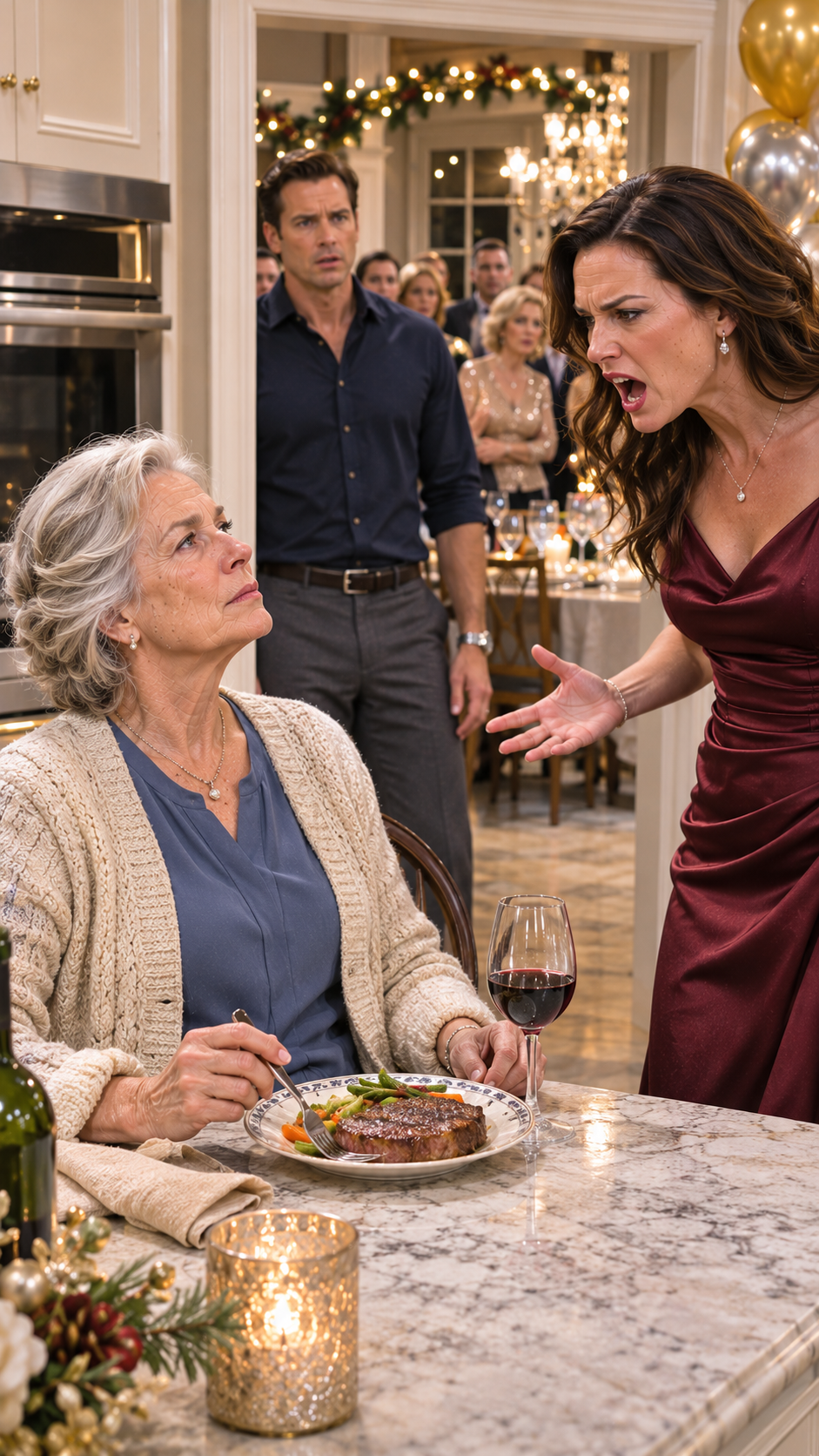
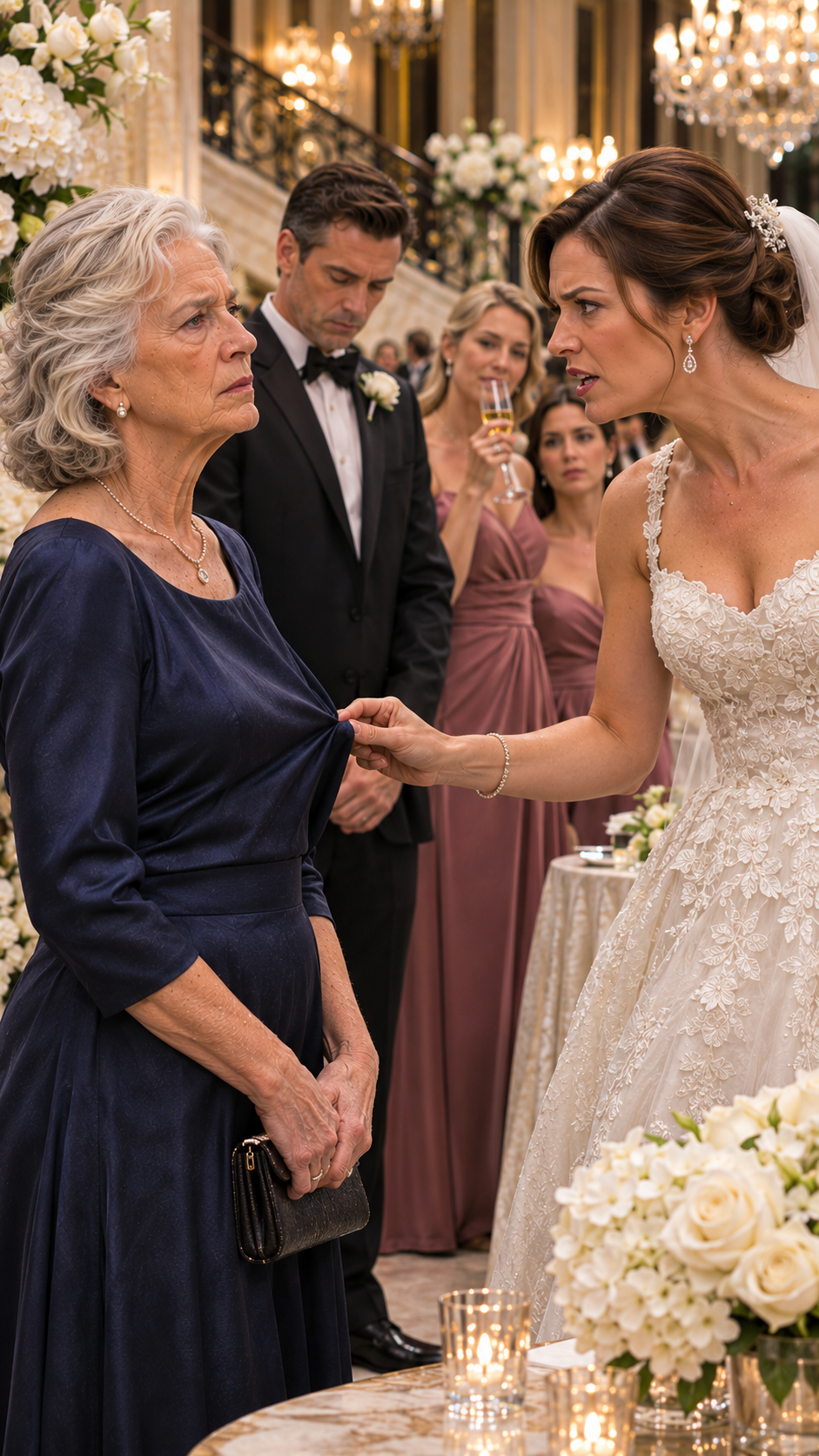
The terrifying realization that I was falling.
My scream as the wooden steps disappeared beneath my feet.
The impact.
The pain.
And Sophia standing above me while I lay twisted at the bottom of the stairs, unable to move.
I remembered her face.
She had looked frightened then, too.
But not because I was hurt.
Because I was still breathing.
I stared at her without answering.
Then I moved past her.
Each step was agony.
The heavy medical boot struck the floor with a dull thud.
My cane tapped sharply against the polished wood.
Nobody spoke.
Nobody moved to help.
They simply watched as I made my way toward the dining table.
At the far end stood an empty chair.
My chair.
The place where I had sat for years, surrounded by family during Christmas dinners.
The place my late husband used to pull out for me before taking his seat beside mine.
Now it stood empty because Daniel and Sophia had apparently assumed I would never dare return.
I reached it slowly.
Turned.
And lowered myself into the seat.
Pain shot through my ankle, but I refused to let it show on my face.
I placed my cane carefully beside me.
Then I looked directly at Sophia.
“You know exactly what happened.”
Her mouth opened.
For a moment, she seemed unable to breathe.
Then her lips moved.
But no words came out.
Across the table, Daniel leaned back in his chair.
And laughed.
Not nervously.
Not awkwardly.
He laughed slowly, almost lazily, with the smug confidence of a man who believed he had already won.
“Maybe you finally learned your lesson,” he said.
For one terrible moment, I forgot about the pain in my foot.
Because broken bones can heal.
But hearing your own child take pleasure in your suffering is a different kind of wound.
I looked at Daniel.
My son.
The boy whose tiny hand I had held on his first day of school.
The teenager I had defended when teachers complained about his reckless decisions.
The young man I had encouraged when he struggled to find his place in the world.
The grown man I had rescued financially when his business collapsed and he promised, with tears in his eyes, that he would repay every dollar.
I had stood beside him through mistakes, failures, disappointments, and countless broken promises.
And now he was sitting at my Christmas table, looking at my broken foot as though it were proof of some great victory.
Sophia shot him a sharp glance.
“Daniel,” she whispered.
He ignored her.
Of course he did.
Daniel had always believed that confidence could substitute for good judgment.
And at that moment, he was more confident than I had ever seen him.
He thought the hospital had weakened me.
He thought the medication had made my memories unreliable.
He thought the fear of another fall would keep me silent.
Most importantly, he believed the legal papers he had filed while I was recovering would finally give him control of my home.
My home.
The house my late husband and I had worked thirty years to keep.
The house where we had celebrated birthdays, anniversaries, graduations, and countless Christmas mornings.
The house where my husband had spent his final years.
The house that held almost every precious memory of our marriage.
Daniel had told the court I was too confused to manage it.
He had presented himself as the responsible son.
The concerned caregiver.
The man who simply wanted to protect his aging mother from making dangerous financial decisions.
But while I was lying in a hospital bed with a broken foot, he had already begun discussing the possibility of selling the property.
My property.
He called it protection.
He called it responsibility.
He told people he was doing what was best for me.
But when I looked into his eyes beneath the warm Christmas lights, I saw nothing resembling concern.
I saw greed.
And something even more painful.
The complete absence of shame.
My fingers tightened around the small recorder concealed beneath my coat.
Daniel mistook my silence for surrender.
He lifted his wineglass.
“You made this harder than it needed to be, Mom.”
I didn’t respond.
He continued.
“We tried to handle everything peacefully. But you just wouldn’t listen.”
Several relatives exchanged uncomfortable glances.
Daniel seemed encouraged by their silence.
“Maybe now you understand that you can’t keep fighting us.”
Sophia turned visibly pale.
“Stop talking,” she whispered.
But Daniel laughed again.
“Why?”
He gestured toward my medical boot.
“She can barely walk. What’s she going to do?”
A few people shifted in their chairs.
Someone near the Christmas tree cleared their throat.
I could feel the attention of every person in the room moving between Daniel and me.
My son seemed to believe he was humiliating me.
He thought he was demonstrating his authority.
He had no idea that every careless word was making the truth harder for him to escape.
I looked at him steadily.
For years, I had made excuses for his behavior.
I had told myself he was under pressure.
That he was struggling.
That he didn’t always mean the cruel things he said.
I had believed that beneath his arrogance was still the little boy who once ran into my arms after scraping his knee.
But sitting across from him that Christmas Eve, I finally understood something I had been refusing to accept.
The boy I remembered and the man sitting before me were not the same person.
And loving my son did not mean I had to protect him from the consequences of his choices.
I took a slow breath.
Daniel raised his glass again, apparently preparing to say something else.
But before he could speak, the front door opened.
A rush of freezing air swept through the hallway.
The candles flickered.
Cold wind moved across the polished floor.
Outside, snow crunched beneath heavy boots.
Daniel turned toward the entrance.
And his smile vanished.
A uniformed police officer stepped into the house.