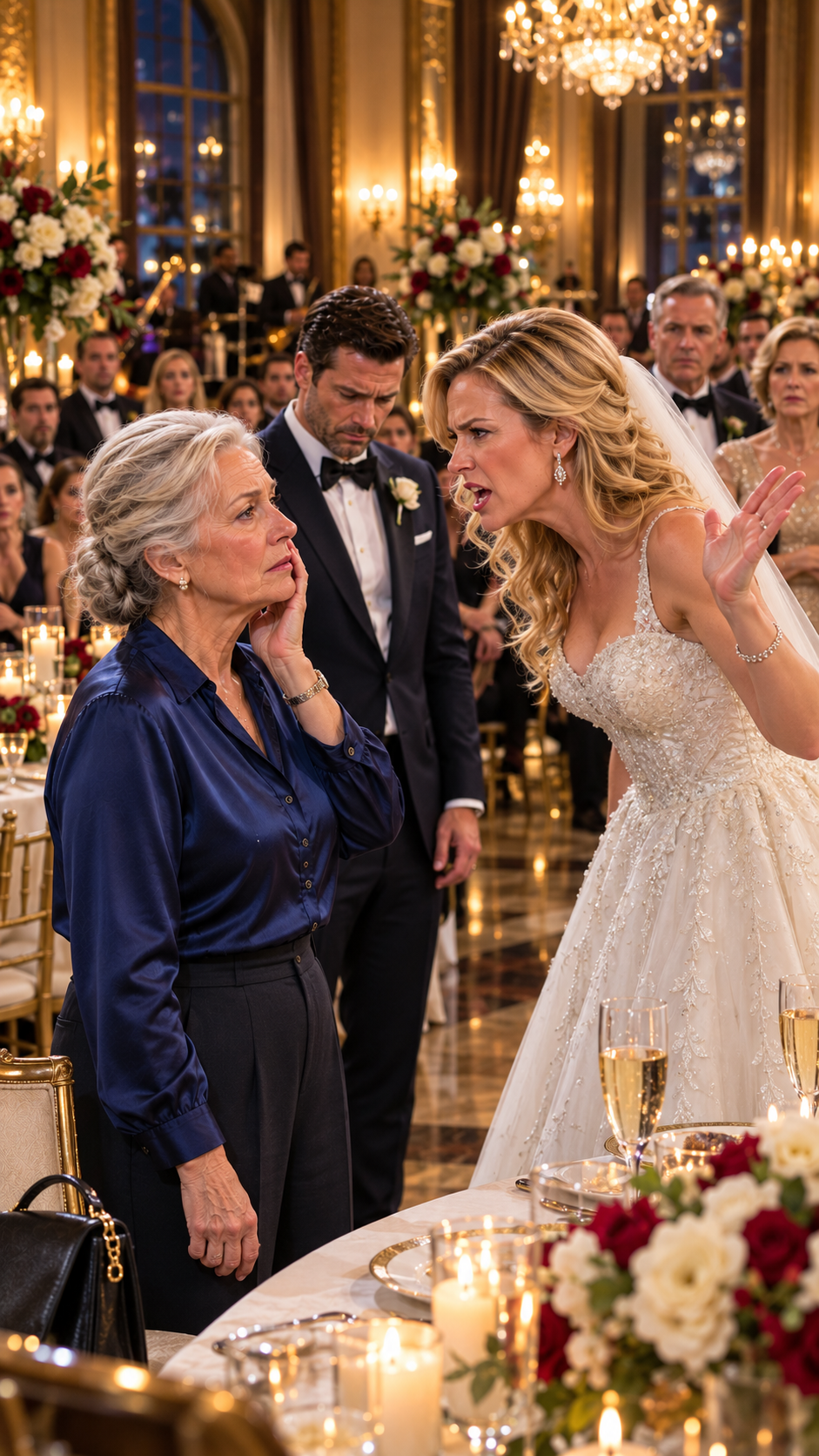
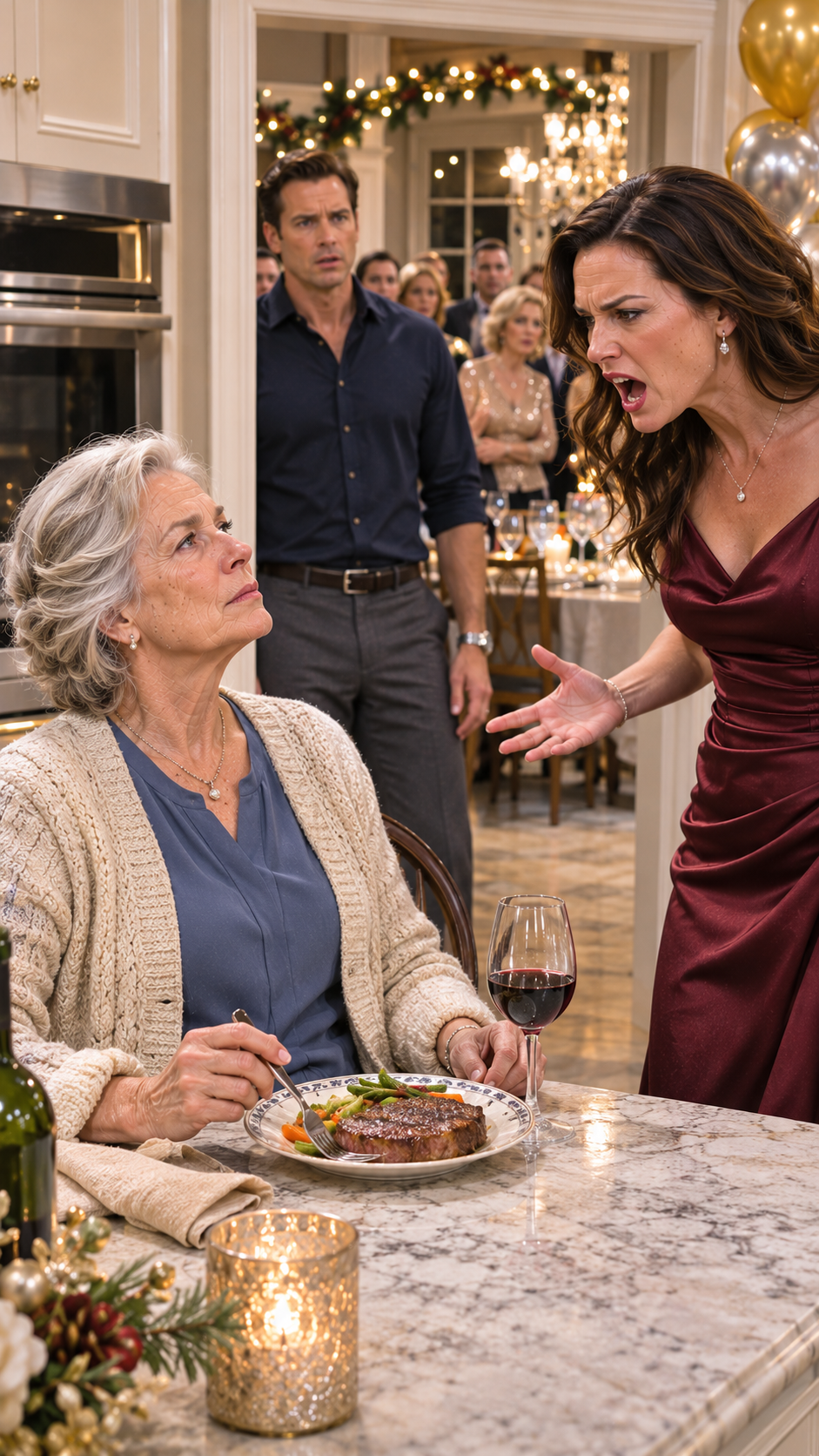
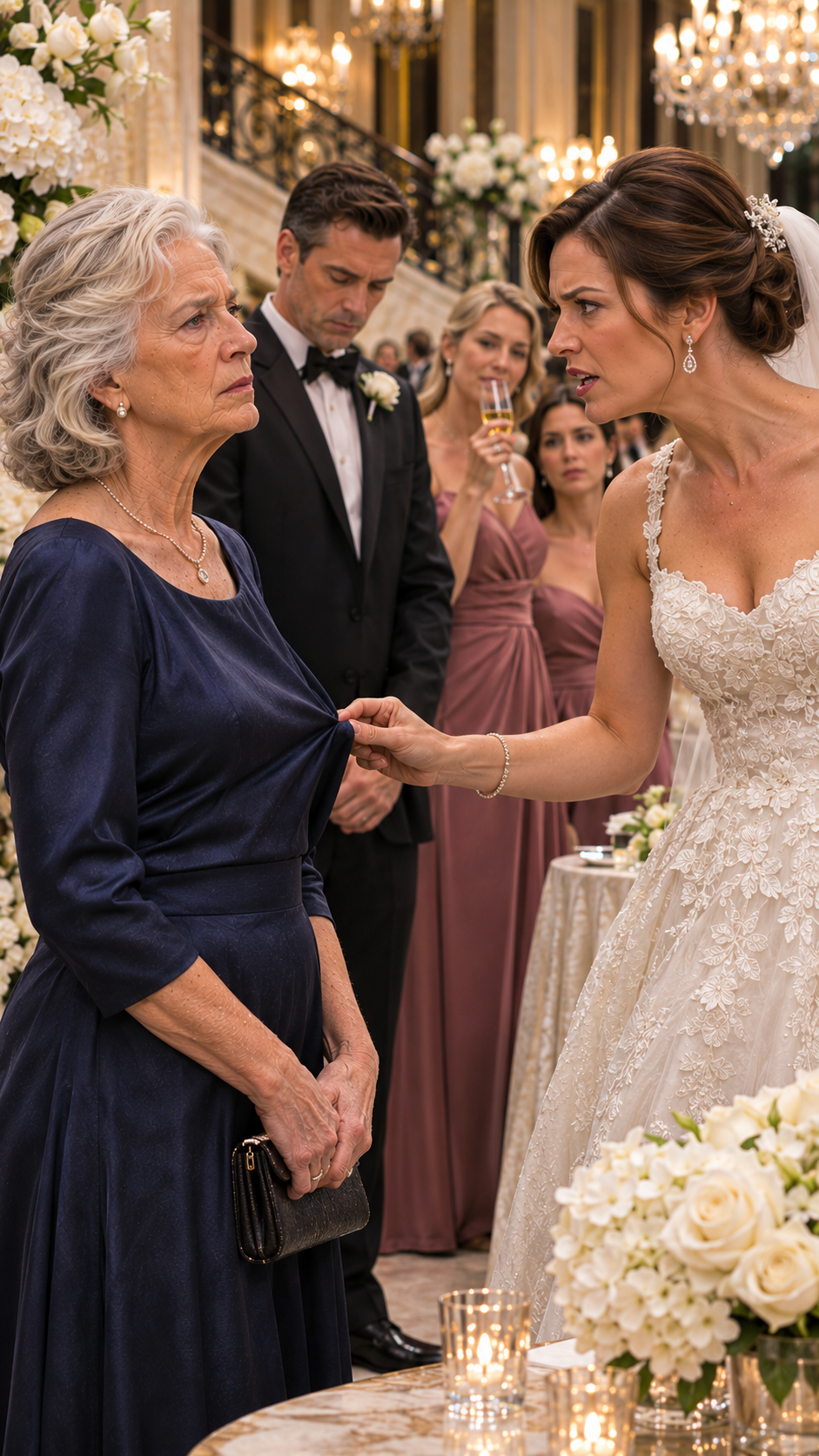
The voice that had convinced me to cover his debts.
The voice that had always found a way to turn his mistakes into my responsibility.
He took one step toward me.
“Please don’t do this to your own son.”
I looked at him.
And answered with the words I had spent three weeks gathering the courage to say.
“You already did this to your mother.”
He stopped.
His eyes filled with tears.
But I could no longer tell whether he was grieving what he had done or what he was about to lose.
The officer asked him to remain where he was while another officer entered from the hallway.
They had been waiting nearby.
The investigation had begun before Christmas Eve.
The recording was not the only evidence.
And Daniel was about to discover that my broken foot had not prevented me from protecting myself.
I had spent the first days in the hospital drifting between pain and exhaustion.
The doctors had stabilized my injury.
The nurses had helped me manage the swelling.
But sleep had been difficult.
Every time I closed my eyes, I felt myself falling again.
I would wake gripping the bedsheets.
Sometimes I could still hear the sharp crack of my foot striking the stairs.
Sometimes I imagined Sophia’s face above me.
And sometimes I wondered whether I had somehow caused the entire disaster by refusing to give Daniel more money.
That was the most humiliating part.
Even after what they had done, I was searching for a way to blame myself.
Then Margaret arrived.
She sat beside my hospital bed and noticed that I flinched whenever footsteps approached from behind.
She didn’t immediately ask questions.
She simply moved her chair where I could see her.
Then she said, “You don’t have to protect him from me.”
I turned toward her.
“Who?”
She looked at me for a long moment.
“Your son.”
I began crying before I could answer.
Not loudly.
Not dramatically.
The tears simply came.
Margaret reached for a tissue.
Then waited.
Eventually, I told her everything.
The pressure on my back.
Sophia standing above me.
Daniel’s strange insistence that I was confused.
The legal papers I had learned about from a hospital social worker.
Margaret listened without interrupting.
When I finished, she asked whether I would let her help me contact an attorney.
I nodded.
That decision changed everything.
My attorney, Diane Foster, obtained copies of the filings Daniel had submitted.
She also helped me understand that a petition claiming I lacked capacity did not automatically give him authority over my property.
There would be a process.
Evidence.
An opportunity for me to respond.
And independent medical information that Daniel could not simply replace with his own accusations.
For the first time since the fall, I felt something stronger than fear.
I felt the beginning of control.
Then Diane discovered that Daniel had contacted a real estate agent about selling the house.
He had described himself as the person who would soon be managing my affairs.
The agent had not agreed to list the property without proof of authority.
But Daniel had already discussed a possible sale price.
He had even asked how quickly the proceeds could become available.
I remember staring at the printed messages.
My son had been discussing the sale of my home while I was learning how to stand on my injured foot.
Diane studied my face.
“There’s something else,” she said.
She showed me a copy of a financial worksheet attached to Daniel’s court petition.
It included my estimated home equity.
My savings.
My investments.
And a handwritten note beside the total.
“Enough to clear everything.”
I looked up.
“Clear what?”
Diane hesitated.
“That’s what we need to find out.”
We did not yet know the answer.
But Daniel’s desperation was no longer difficult to see.
He had debts.
He had creditors.
And he had decided that my remaining assets were the solution.
The recording came into our possession through Sophia herself.
Two days before Christmas, she contacted me at the hospital.
Her voice sounded thin and frightened.
She said she needed to speak privately.
I refused to meet her alone.
Instead, Diane arranged for us to speak with appropriate safeguards, and Sophia agreed to provide information to investigators.
She had recorded an argument with Daniel after the fall.
She told me she had begun recording because he was threatening to blame her for everything.
At first, I could barely understand what she was saying.
Then she played a short portion.
I heard Daniel’s voice.
And something inside me went cold.
Sophia had pushed me.
But Daniel had encouraged the confrontation.
He had wanted me frightened.
Dependent.
Easier to control.
And when the fall left me seriously injured, he had immediately begun calculating what might happen if I never recovered.
I listened to the recording once.
Then asked Diane to stop it.
I could not bear to hear more.
But investigators needed to examine it.
And I needed to decide whether I was willing to let the truth become public.
For three days, I struggled with that decision.
I thought about the shame.
The relatives.
The neighbors.
The possibility that Daniel might face criminal charges.
I imagined people whispering about our family.
I imagined Christmas becoming a story nobody would ever forget.
Then I remembered lying at the bottom of the staircase.
I remembered Sophia looking down at me.
I remembered Daniel telling relatives that my memory could no longer be trusted.
And I understood that silence would not protect my family.
It would protect the people who had hurt me.
So I cooperated.
Investigators reviewed the recording, the medical records, the financial documents, and the accounts we provided.
When they learned Daniel and Sophia were planning a Christmas Eve gathering in my house, they discussed how to handle the situation safely.
I was advised not to confront them alone.
The officers remained responsible for their own decisions and procedures.
But I insisted on one thing.
If it was safe for me to return, I wanted to walk through my front door.