Daniel visited regularly.
Sometimes he brought dinner.
Sometimes he repaired something around the house.
Sometimes we simply talked.
He never asked me to pay another debt.
And I never offered.
Our relationship became smaller in certain ways.
Less dramatic.
Less dependent.
But it also became more honest.
One afternoon, he arrived carrying a small wrapped package.
“I know we missed the mother-son dance,” he said.
I looked at him.
He seemed nervous.
“I can’t undo the wedding. But I wanted to give you something.”
Inside the package was a photograph.
It showed Daniel at seventeen, standing beside Robert in our backyard.
I was between them.
Laughing.
Robert had one arm around my shoulders.
Daniel was holding a book I had given him.
Beneath the photograph, Daniel had written a single sentence.
Thank you for teaching me how to begin again.
I held the frame against my chest.
Then Daniel took out his phone.
Soft music began playing.
He stood and offered his hand.
“Mom, would you dance with me?”
I stared at him.
My eyes filled.
There were no chandeliers.
No orchestra.
No photographers.
No expensive champagne.
Only my living room.
The ticking clock.
The snow falling beyond the windows.
And my son standing before me with his hand extended.
I placed my hand in his.
He guided me gently across the carpet.
We moved slowly.
Awkwardly.
Laughing when we stepped on each other’s feet.
Then Daniel whispered, “I’m sorry I took this moment away from you.”
I rested my head against his shoulder.
“You’re giving it back now.”
And for the first time since Robert died, I felt that our family was finding its way toward something whole again.
Not the family we had been.
Something wiser.
Something more honest.
Something built on respect rather than rescue.
The following spring, Thomas called with another piece of news.
The Robert Vance Hospitality Scholarship had received enough outside donations to expand.
Several former employees wanted to contribute.
A few hotel guests had heard about the program and offered support.
One donor asked to remain anonymous.
Thomas sounded unusually pleased.
“Mrs. Vance, I believe this could become something lasting.”
I stood beside my kitchen window.
Sunlight fell across the old wooden floor.
Outside, the garden was beginning to bloom.
“Then let’s make sure it does.”
We established a permanent educational fund.
Not one that would disappear when I was gone.
A carefully managed program designed to provide opportunities for generations.
I began spending more time with the scholarship students.
Sometimes I helped them prepare presentations.
Sometimes I reviewed applications.
Sometimes I simply listened.
I discovered that I missed the library more than I had realized.
Not the shelves.
Not the cataloging.
The people.
The extraordinary moment when someone begins to believe in their own possibilities.
So I arranged for the Grand Bellamy to host a small reading and mentoring room for employees and their families.
We filled it with books.
Comfortable chairs.
Warm lamps.
And a long wooden table where children could study while their parents worked.
I called it Robert’s Room.
Daniel helped assemble the shelves.
One afternoon, I found him sitting on the floor beside a little boy who was struggling to read.
My son was patiently helping him sound out a difficult word.
He didn’t know I was watching.
The boy finally pronounced it correctly.
Daniel smiled.
“There you go. I knew you could do it.”
The child beamed.
I stood in the doorway.
And suddenly, I saw the man Robert had hoped our son would become.
Not because Daniel was wealthy.
Not because he owned a company.
Not because he could impress strangers.
But because he had learned the quiet dignity of helping someone without expecting anything in return.
A year after the wedding, I received a letter from Brooke.
It arrived in a plain white envelope.
No expensive stationery.
No dramatic announcement.
Just my name written across the front.
I sat at the kitchen table and opened it.
The letter was short.
Brooke acknowledged that she had treated me cruelly.
She admitted that the wedding humiliation had been deliberate.
She wrote that the financial investigation and the collapse of her marriage had forced her to confront patterns of behavior she had spent years justifying.
She did not ask me for money.
She did not ask me to intervene with Daniel.
She did not ask me to make the consequences disappear.
She simply wrote:
I don’t expect forgiveness. But I wanted you to know that I understand now that what I did was wrong.
I read the letter twice.
Then I folded it.
For a long time, I sat quietly.
I did not feel triumphant.
I did not feel vindicated.
I felt something gentler.
Relief that I no longer needed her apology to know my dignity mattered.
I placed the letter in a drawer.
And went outside to tend my garden.
That summer, Daniel and I returned to the Grand Bellamy.
Not for a wedding.
Not for a lavish celebration.
But for the scholarship program’s annual gathering.
The ballroom looked different in daylight.
Sunlight streamed through the enormous windows.
Simple flowers decorated the tables.
Young people laughed together.
Families embraced.
Thomas stood near the entrance greeting guests.
Daniel walked beside me.
As we approached the ballroom doors, he stopped.
“Mom?”
I turned.
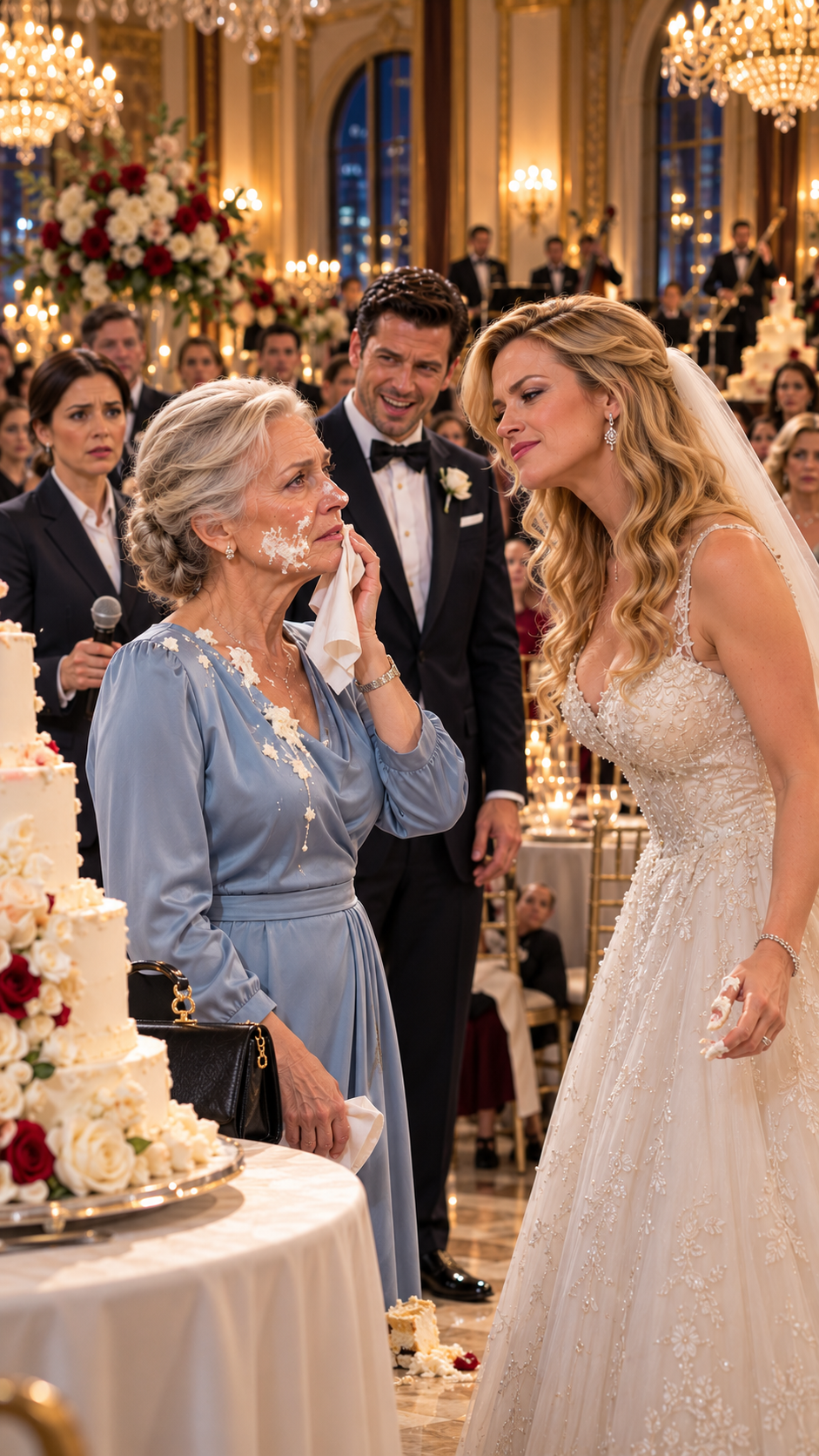
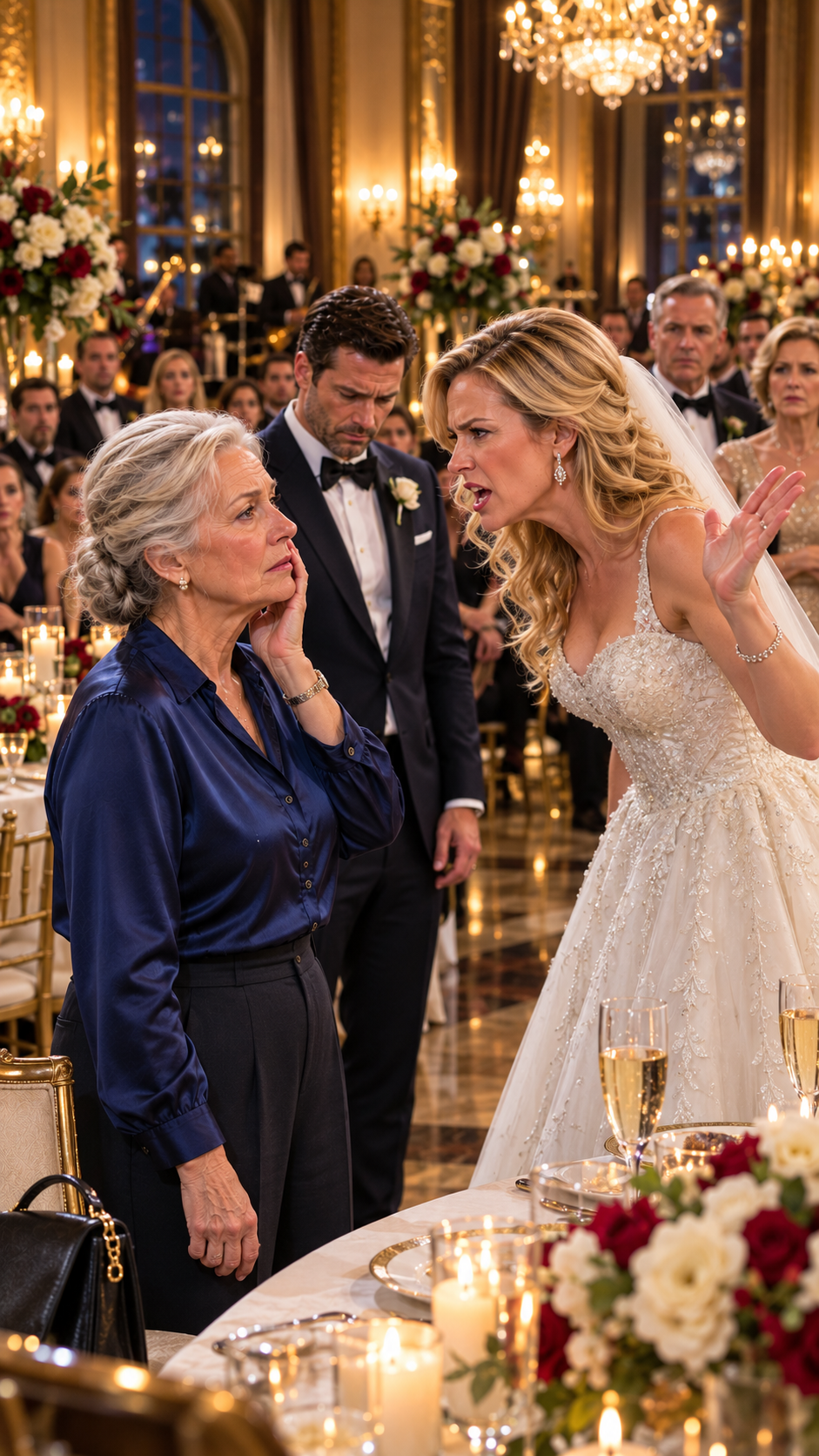
He looked toward the place where Brooke had humiliated me.
“I haven’t been able to walk through here without remembering that night.”
I nodded.
“Neither have I.”
He took a breath.
“I wish I could change it.”
“I know.”
He looked at me.
“Does it still hurt?”
I considered the question.
Then I answered honestly.
“Sometimes.”
His eyes lowered.
“But it doesn’t define us anymore.”
He looked up.
I offered my arm.
“Shall we?”
He smiled.
And together, we entered the ballroom.
The scholarship ceremony was beautiful.
Not because of expensive decorations.
But because of the people.
A young man who had once worked washing dishes received funding to complete his hospitality degree.
A single mother accepted a training award that would allow her to qualify for a management position.