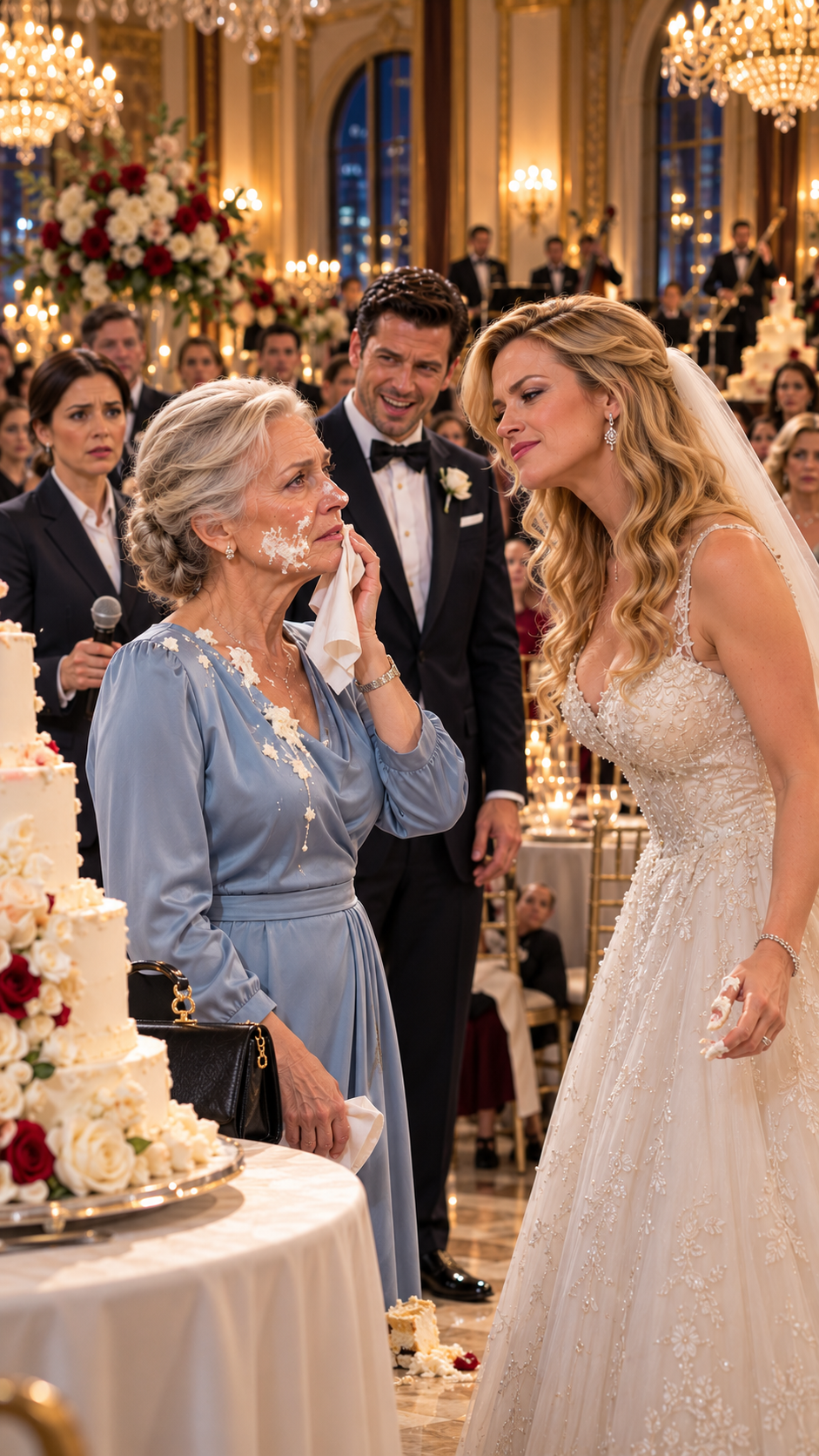
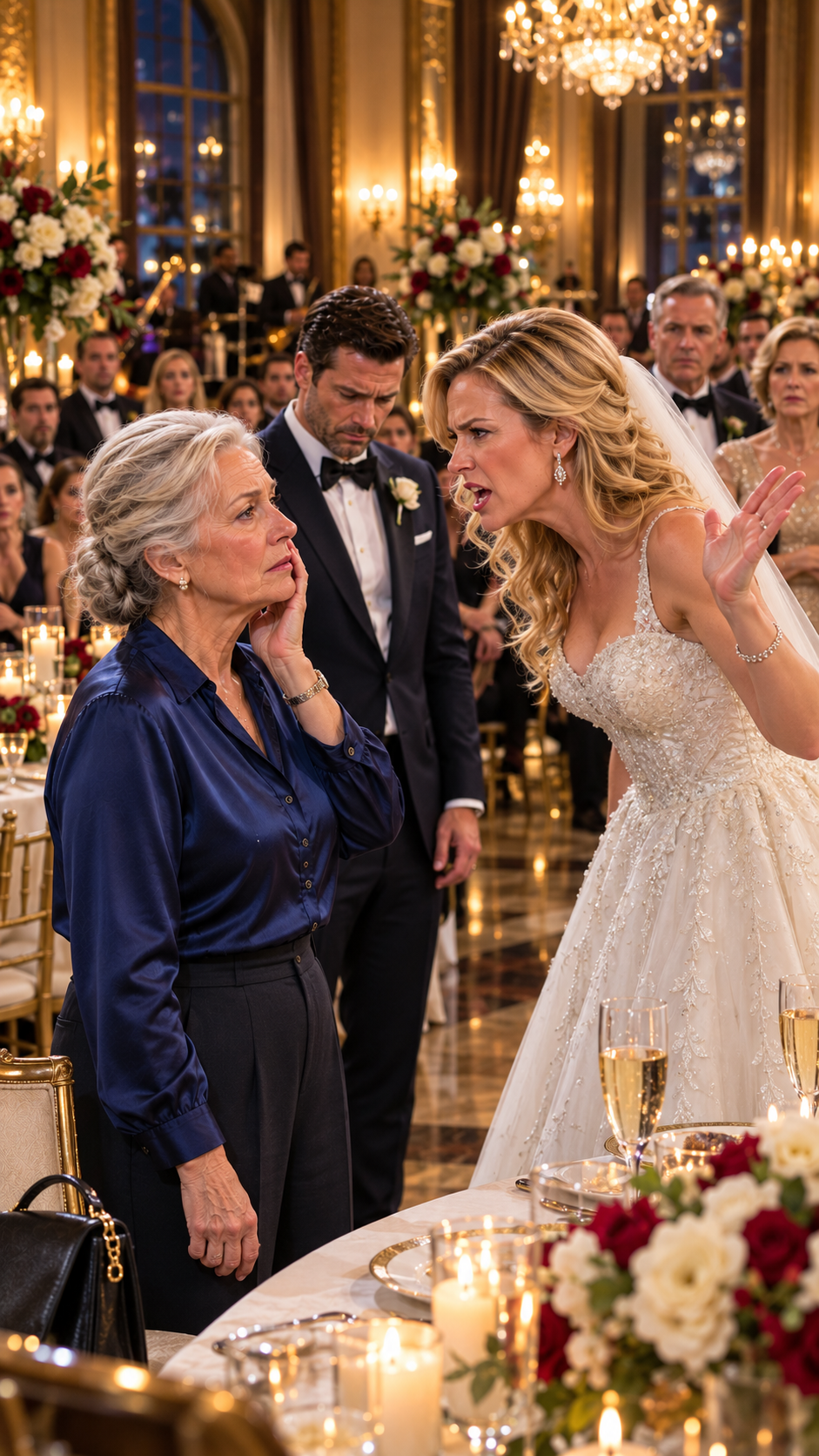
I looked at him.
“For whom?”
He closed his eyes.
“For me.”
There it was.
The truth.
He had sacrificed my dignity to protect his own comfort.
I reached for his hand.
“Daniel, I can forgive you.”
He began crying.
“But forgiveness doesn’t mean we pretend it never happened.”
He nodded.
“You’ll have to keep showing me that you’ve changed.”
“I will.”
I squeezed his hand.
“And I have something to apologize for too.”
He looked startled.
“For what?”
“For teaching you that love meant never letting you fail.”
He shook his head.
“Mom, you were trying to help.”
“I was.”
I paused.
“But sometimes I helped you avoid becoming the man you needed to be.”
We sat together for a long time.
Neither of us tried to make the conversation easier.
And somehow, that made it healing.
The Grand Bellamy changed too.
Thomas approached me several months after the wedding with an idea.
He wanted to establish a small educational program for young hospitality workers.
Training scholarships.
Mentorships.
Practical opportunities for people who couldn’t afford expensive professional programs.
He knew how much I had loved working in the school library.
“Mrs. Vance,” he said, “you’ve spent your life helping people learn. I thought perhaps we could build something meaningful around that.”
I studied the proposal.
It was modest.
Carefully budgeted.
Focused on long-term outcomes rather than public recognition.
I smiled.
“Robert would have liked this.”
Thomas nodded.
“I believe he would.”
We established the Robert Vance Hospitality Scholarship.
Its first recipients were three young people who had been working part-time jobs while studying.
At the presentation ceremony, I wore a simple navy dress.
No elaborate jewelry.
No expensive hairstyle.
Just my mother’s pearl earrings.
I stood beside Thomas as the students received their awards.
One young woman approached me afterward.
“Mrs. Vance, thank you. My father lost his job last year. I wasn’t sure I could finish school.”
I took her hand.
“Then promise me something.”
She nodded eagerly.
“When you’re successful, remember how it felt to need someone to believe in you.”
Her eyes filled.
“I will.”
I watched her walk away.
And I realized that generosity had never been the problem.
The problem was giving without boundaries to people who had stopped recognizing the humanity behind the gift.
Then came a discovery I never expected.
It happened on a quiet autumn morning.
I was organizing Robert’s old papers in the attic.
Dust floated through the sunlight coming from the small window.
Cardboard boxes lined the walls.
I found photographs.
Letters.
Old hotel documents.
And a narrow wooden box tied with faded blue ribbon.
Inside was a letter addressed to me.
Robert’s handwriting.
I sat down on an old trunk.
My hands trembled as I unfolded it.
My darling Evelyn,
If you’re reading this, I hope you’re sitting somewhere comfortable, preferably with a cup of tea and one of those books you always promise you’ll finish.
I smiled through sudden tears.
I’ve been thinking about Daniel.
He’s a good boy. But he has a weakness that worries me.
He wants people to admire him.
Sometimes so badly that he forgets what really matters.
I hope life teaches him that kindness is more important than appearances.
And I hope you remember that you cannot learn his lessons for him.
I stopped reading.
My breath caught.
Robert had seen something I had spent years refusing to acknowledge.
I continued.
You have the biggest heart of anyone I’ve ever known.
But Evelyn, love should never require you to disappear.
If Daniel makes mistakes, let him face them.
If he falls, help him stand.
But don’t carry him so long that he forgets how to walk.
I pressed the letter against my chest.
Tears slid down my cheeks.
Then I read the final paragraph.
And one more thing.
The hotel was never meant to be our greatest legacy.
You are.
Your kindness. Your wisdom. Your love of learning.
If you ever wonder what to do with the opportunities we’ve been given, use them to help people become stronger, not dependent.
That will be enough.
Forever yours, Robert.
I sat in the attic for a long time.
The house was silent.
Outside, leaves moved gently in the autumn wind.
For years, I had believed protecting Daniel meant keeping him from hardship.
Now I understood that Robert had wanted something different.
He wanted our son to become capable of facing hardship.
And he wanted me to remember that my own life mattered too.
I showed Daniel the letter the following Sunday.
He read it at the kitchen table.
At first, his expression remained composed.
Then his eyes filled.
He read the paragraph about wanting admiration twice.
Finally, he set the letter down.
“Dad knew.”
I nodded.
“He knew you had a good heart. And he knew there were things you needed to learn.”
Daniel covered his face.
“I wish he were here.”
“So do I.”
He looked toward the window.
“I spent so many years trying to look successful.”
His voice was quiet.
“I wanted people to think I had everything figured out.”
I waited.
“But I didn’t even know how to be honest with my own mother.”
I reached across the table.
“You’re learning.”
He looked at me.
“Do you think he’d be proud of me now?”
I considered the question carefully.
“I think he’d be proud that you’re finally doing the difficult work.”
Daniel nodded.
Then he folded the letter gently and returned it to me.
“Can I have a copy?”
“Of course.”
He smiled faintly.
“I want to keep it somewhere I’ll see it every day.”
Winter arrived quietly.
The first snowfall covered the old clapboard house in white.
I spent mornings reading beside the fireplace.
Afternoons walking through the neighborhood.
And evenings enjoying the kind of peace I had once believed required everyone around me to be happy.
I learned something surprising.
Peace did not mean having no problems.
It meant no longer accepting responsibility for every problem that belonged to someone else.