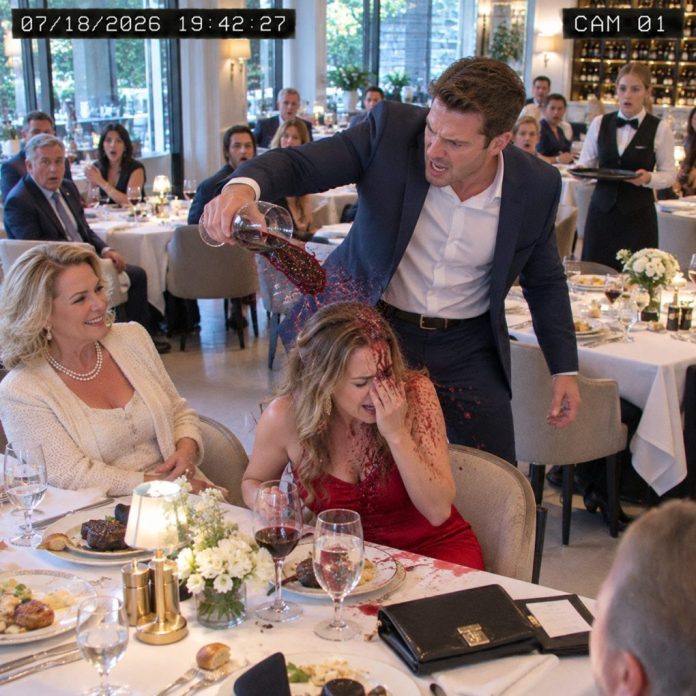
My attorney helped me arrange a temporary separation and gave me a list of practical steps: change passwords, secure my personal account, and keep communication in writing. I followed the advice. I wasn’t trying to punish Grant. I needed distance and a clear record of what happened.
The restaurant sent me a confirmation that the footage had been preserved. The server and manager provided statements. I gave the incident number and the video information to my attorney, then let the process move forward without posting about it online or contacting Grant’s employer.
A week later, Grant asked to meet in a public place. I agreed only after my attorney confirmed the arrangements. He arrived alone, looking tired and less certain than he had at the restaurant. He said he had been angry about the bill and ashamed that I challenged him in front of his family.
“That doesn’t explain throwing wine at me,” I said.
He looked down. “I know. I shouldn’t have done it.”
It was the first time he had apologized without adding that I’d provoked him. I told him I appreciated the honesty, but I wasn’t ready to come home. He asked whether I would drop the report if he promised to get help. I said I would not bargain away the record of what happened. He could seek counseling because he needed it, not because I owed him a reward.
Carol left one voicemail saying she was sorry the dinner had become uncomfortable. She did not apologize for smiling while Grant threw the wine. I never called her back. I had spent years smoothing over her comments to keep peace in the family. I was no longer willing to call silence peace.
Over the following months, Grant and I communicated through our attorneys as we began divorce proceedings. The incident report and video became part of the record, but there was no dramatic courtroom scene. We divided our shared property, closed the joint account, and set boundaries around contact. Grant completed an anger-management program, though that did not change my decision.
The restaurant staff replaced my blouse after reviewing the footage, and the manager apologized for how the evening had unfolded. I thanked him, then moved on. The stain came out of the shirt after two washes. The more lasting mark was learning how quickly people can call an act “an accident” when they want the person harmed to stay quiet.
Grant eventually sent a short letter. He said he understood that I had not ended our marriage over a bill. I had ended it because he threatened me, humiliated me, and expected me to protect him from the consequences. I believed he finally understood the difference.
I kept the incident number in my files, not as a weapon, but as a reminder to trust what I saw. I had called for help because I deserved to be safe, even at a crowded table surrounded by family.
The lesson was not that every argument must end a marriage. It was that love cannot demand your silence after someone crosses a line. I left the restaurant with wet clothes and shaking hands. I left the marriage with my voice intact.