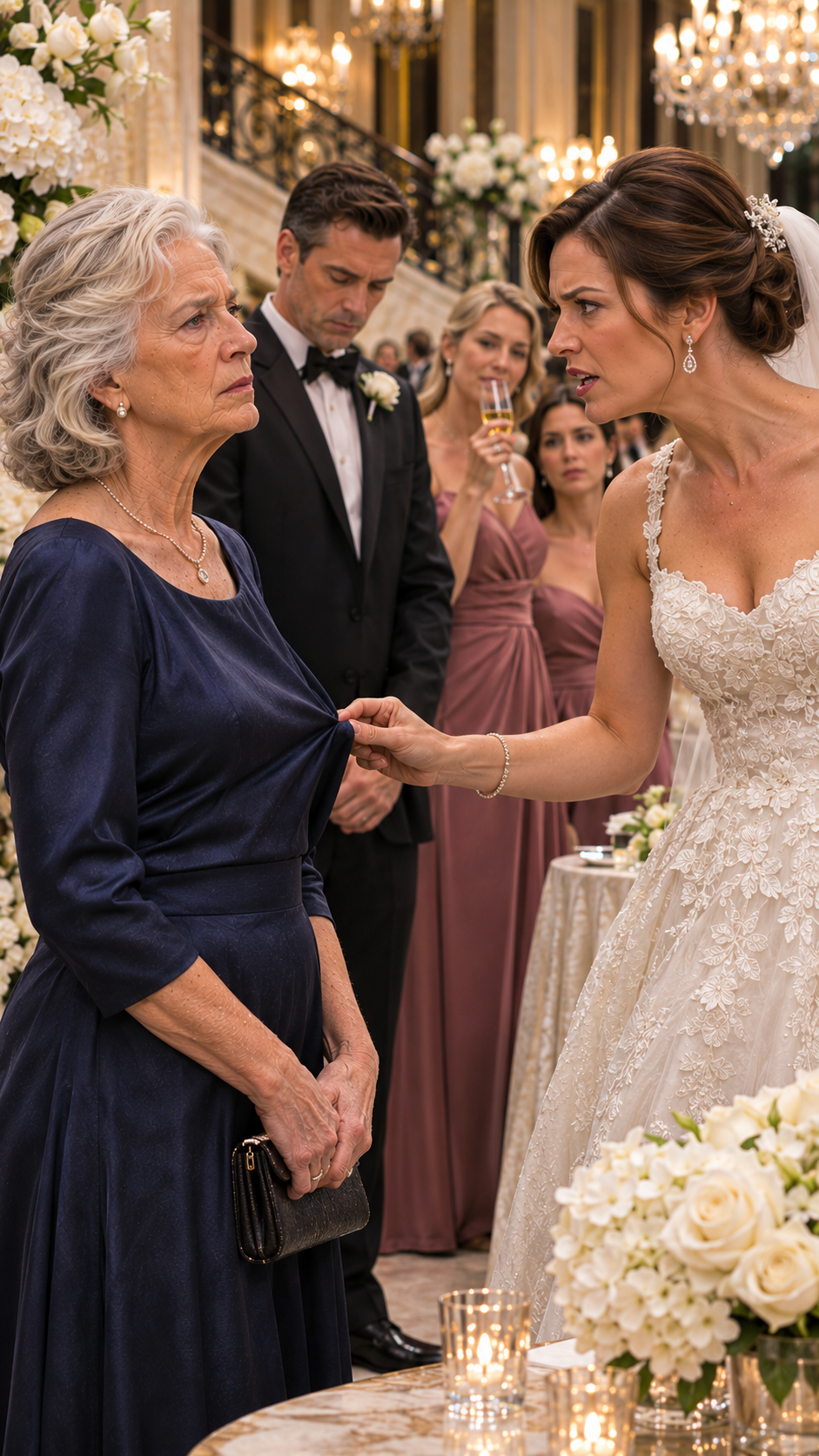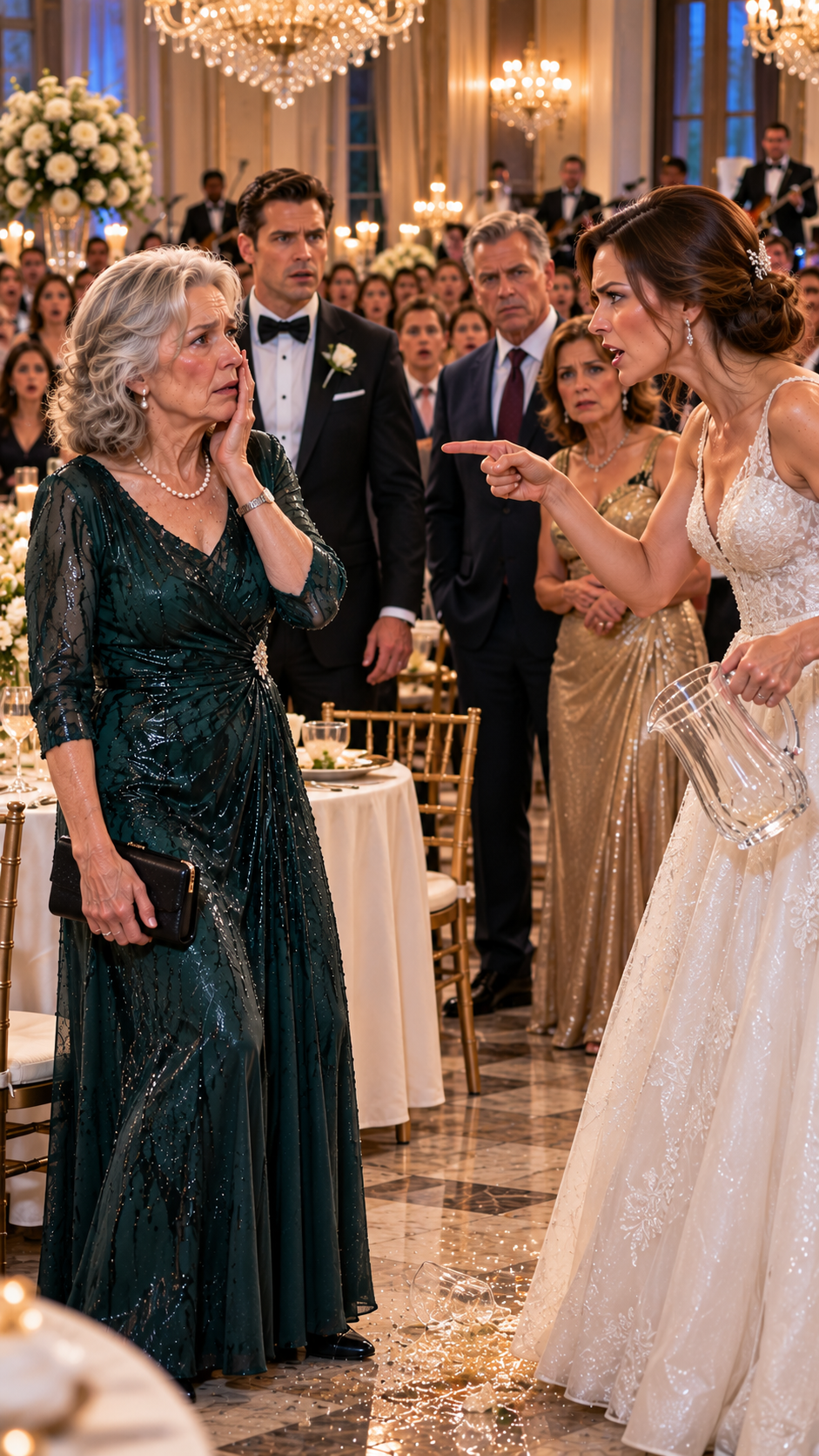
My daughter-in-law slapped me in front of 250 wedding guests because I refused to spend another $2,000 on a bottle of champagne.
Then she ordered me to leave the wedding I had paid more than $45,000 to create.
My son stood only a few feet away.
He watched his new wife strike me.
And he did absolutely nothing.
“You should leave,” Tiffany said, smoothing the front of her shimmering white gown. “You’re ruining the atmosphere.”
I touched my burning cheek and looked at my son one final time.
He lowered his eyes.
That was all the answer I needed.
I picked up my purse and walked out without a word.
What Tiffany didn’t know was that the ballroom, the bar, the band, the luxury transportation, and even the honeymoon suite were all under contracts bearing my signature.
And every one of those contracts gave me rights she had never bothered to understand.
Ten minutes after she threw me out, the bartenders stopped serving champagne.
The musicians began packing their instruments.
The drivers were instructed to leave.
And the venue manager approached the bride’s table carrying a thick stack of documents.
Tiffany screamed, “WHAT IS HAPPENING TO MY WEDDING?”
The manager opened the first contract.
“Mrs. Bennett has exercised her cancellation rights.”
My daughter-in-law went pale.
But she didn’t know the most devastating part yet.
Because to understand why I made that phone call, you need to understand what I had sacrificed to give my son the wedding he wanted.
My name is Margaret Bennett.
When my son first told me he was getting married, I was genuinely happy.
I had always hoped he would find someone who loved him, respected him, and wanted to build a good life beside him.
I didn’t need an extravagant celebration.
I didn’t need a grand estate or expensive decorations.
I simply wanted to watch my son exchange his vows and begin a new chapter of his life.
At first, that seemed to be exactly what he wanted too.
The original plan was modest.
Eighty guests.
A simple ceremony.
A quiet family dinner afterward.
Nothing excessive.
Nothing designed to impress strangers.
When he explained the plans, I smiled.
“That sounds beautiful.”
Then I offered to help with some of the expenses.
Not because anyone demanded it.
Not because I wanted control over the wedding.
Because I loved my son.
That was all.
But once Tiffany became involved in the planning, everything began to change.
The first change was the guest list.
Eighty people became a hundred.
Then a hundred and fifty.
Eventually, Tiffany announced that they were expecting 250 guests.
I remember looking at my son when I heard the number.
He gave me an uncomfortable smile.
“Tiffany has a big family, Mom.”
I nodded.
I didn’t want to argue.
Then the restaurant they had originally chosen was no longer good enough.
Tiffany wanted a private estate.
Something elegant.
Something exclusive.
Something that would look spectacular in photographs.
She found Briarwood.
The property was beautiful.
I couldn’t deny that.
But the cost was far beyond anything we had discussed.
When I raised my concerns, my son took me aside.
“Please, Mom. It’s only one day.”
I looked at him.
He seemed anxious.
Worried that I might refuse.
And because I wanted him to be happy, I agreed.
I told myself it was a special occasion.
A once-in-a-lifetime celebration.
Surely, I thought, this would be the biggest expense.
I was wrong.
The flowers came next.
Seasonal arrangements were no longer elegant enough.
Tiffany wanted imported roses and orchids.
Then she wanted professional lighting.
Personalized gifts for the guests.
Premium wine.
Luxury vehicles.
A designer wedding cake.
An open bar.
A live band.
A honeymoon suite.
And a farewell brunch the following morning.
Every time I thought the budget had finally stopped growing, something else appeared.
And every time I hesitated, my son came to me privately.
“She’s under so much pressure, Mom.”
Or:
“Can you let this one go too?”
Sometimes he would simply look at me with the same pleading expression he had worn as a little boy.
And I would give in.
Again.
And again.
Each request sounded small when separated from the others.
One upgrade.
One additional service.
One more expense.
But those small requests were accumulating into something I could no longer comfortably afford.
I knew it.
My son knew it.
Yet somehow, neither of us wanted to confront Tiffany.
So I kept saying yes.
Until saying yes began costing me things I had spent years building.
First, I emptied most of my savings.
Money I had carefully set aside.
Money intended to give me security as I grew older.
I told myself I could rebuild some of it.
Then I canceled a trip I had dreamed about taking for years.
I had imagined finally traveling without worrying about work, schedules, or family obligations.
It was something I had promised myself I would do.
But when another wedding payment came due, the trip suddenly seemed less important.
Or at least, that was what I told myself.
My son was getting married.
Surely his happiness mattered more than a vacation.
Then came the final sacrifice.
The one I still struggle to think about.
When there wasn’t enough money to satisfy everything Tiffany wanted, I did something I had promised myself I would never do.
I sold part of the land my late husband had left me.
That land wasn’t simply property.
It had belonged to my husband’s family for generations.
It held memories.
History.
A connection to people who had worked hard to preserve it long before I became part of the family.
My husband had cared deeply about that land.
And after he died, I had promised myself I would protect it.
But now I was sitting across from an attorney, staring at papers that would transfer part of it to someone else.
I remember the office.
The quiet hum of the air conditioner.
The documents arranged neatly on the desk.
The attorney showing me where to sign.