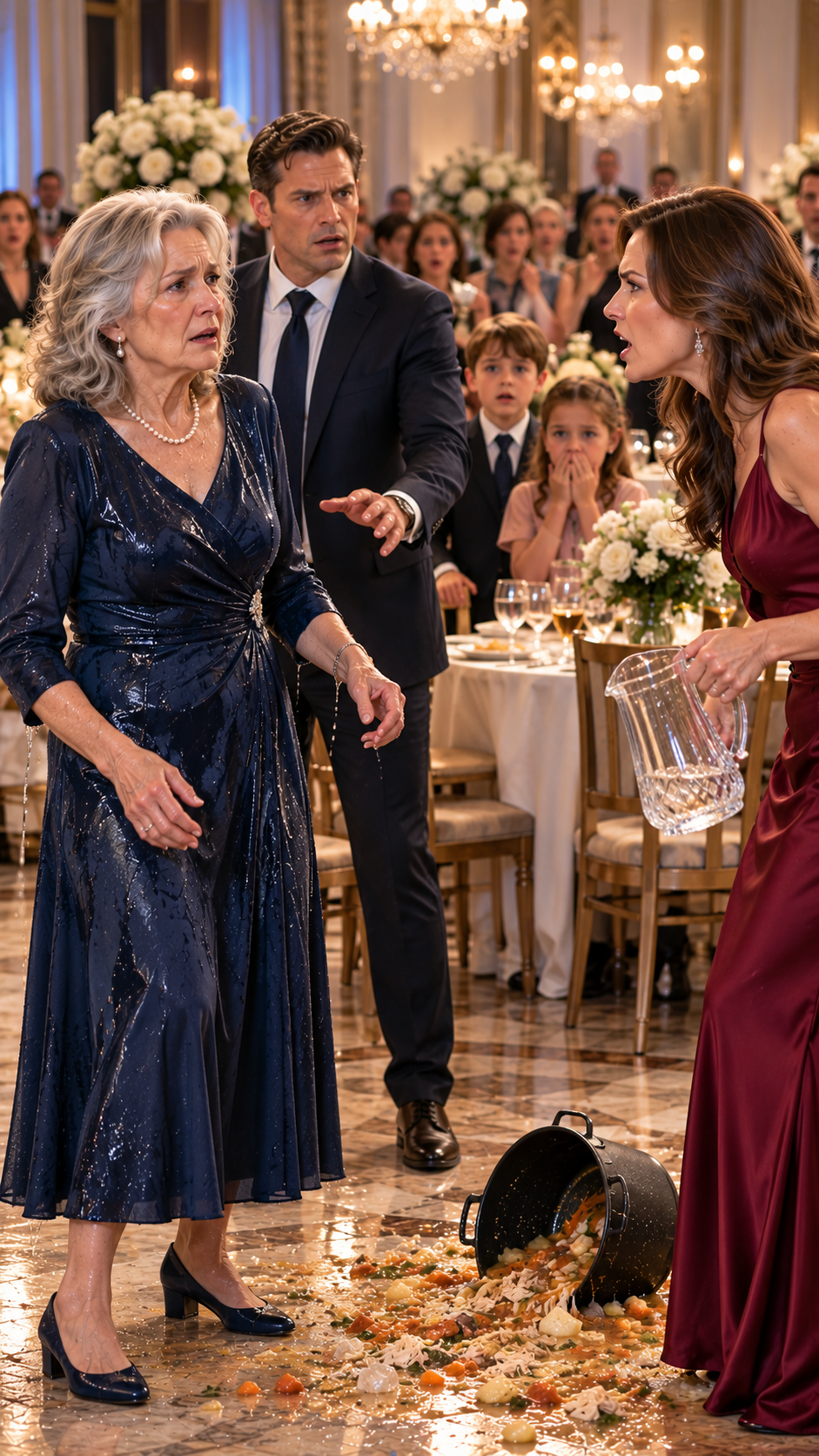
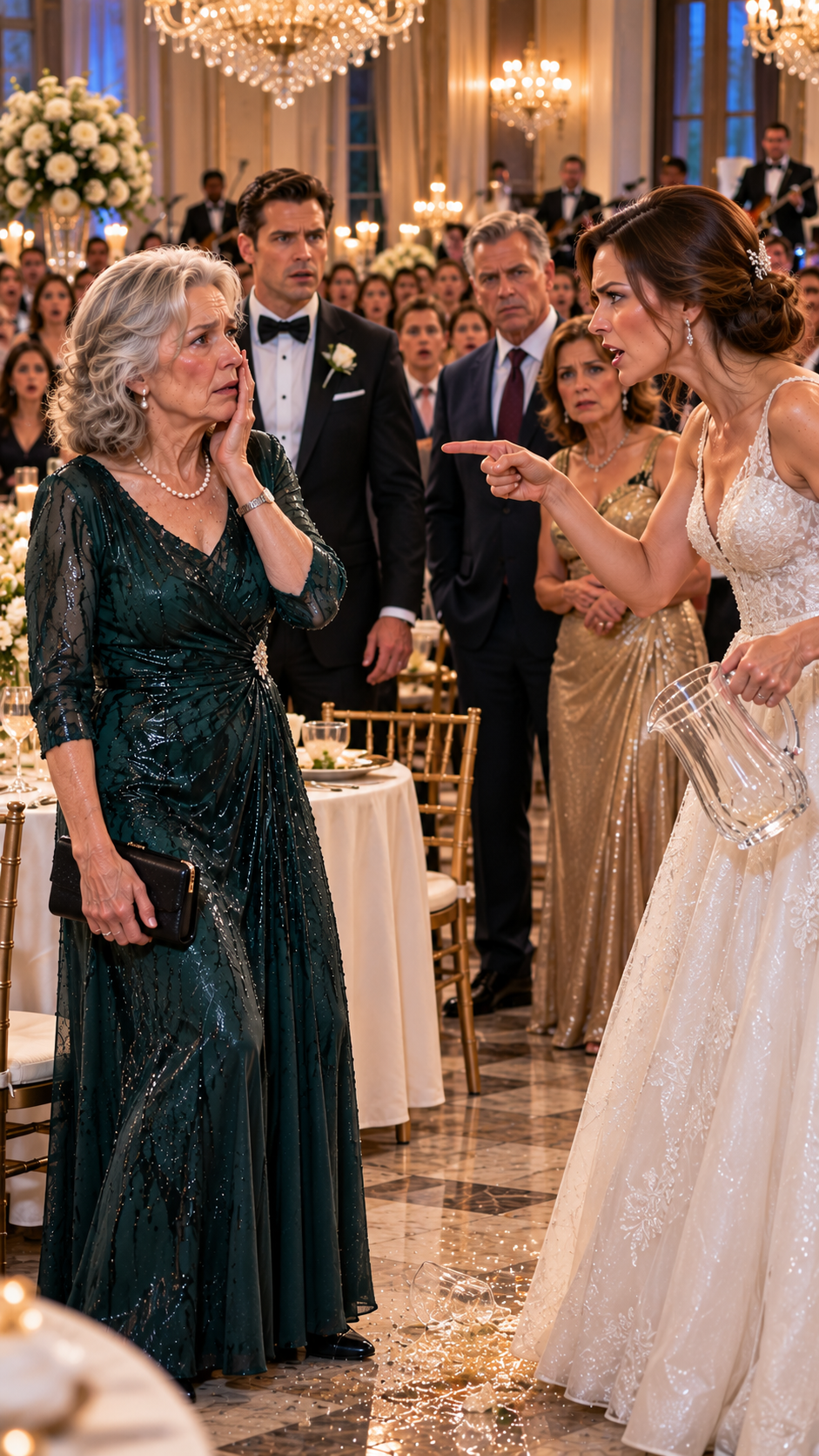
Guests had witnessed the slap.
Several had given statements.
And the venue’s recording confirmed what happened.
Her claim that the incident had been exaggerated collapsed under the evidence.
She faced legal consequences for striking me.
The matter was resolved through the appropriate process, with the incident formally documented and conditions imposed.
The consequences were not erased by her wedding gown.
Or her parents’ influence.
Or her insistence that she had simply been upset.
Her own actions had created them.
And for the first time, she couldn’t demand that someone else pay to make them disappear.
Her parents tried contacting me.
Her father left a message accusing me of humiliating their family.
I didn’t respond.
Her mother sent a long email explaining that weddings were emotional occasions.
I forwarded it to my attorney.
Then I deleted it from my inbox.
I had spent months listening to people explain why Tiffany’s feelings mattered more than my boundaries.
I wasn’t going to spend another year doing the same thing.
My son called repeatedly.
At first, I didn’t answer.
Not because I wanted to punish him.
Because every time I saw his name, I remembered him standing near the dance floor.
Watching.
Silent.
I needed time.
Eventually, he left a message that sounded different from the others.
“Mom, I know you’re not ready to talk.”
He paused.
“I understand.”
His voice broke.
“I just wanted you to know that I’ve started counseling.”
I sat very still.
He continued.
“I need to understand why I kept asking you to sacrifice things I knew mattered to you.”
There was a long silence.
Then he whispered, “I don’t want to be that man anymore.”
I listened to the message twice.
Then placed the phone down.
For the first time since the wedding, I felt something other than grief when I thought about my son.
Not forgiveness.
Not yet.
But the possibility that he might finally be willing to look at himself honestly.
Several weeks later, he asked whether we could meet.
I chose a small café.
Neutral ground.
Somewhere neither of us could pretend everything was normal.
He arrived early.
When I walked in, he stood immediately.
“Mom.”
I nodded.
“Hello.”
He looked thinner.
Tired.
His wedding ring remained on his finger.
We sat opposite each other.
For a moment, neither of us spoke.
Then he whispered, “I’m sorry.”
I looked at him.
He swallowed.
“Not just for the wedding.”
I waited.
“For every time I asked you to pay for something I knew was unreasonable.”
His eyes filled.
“For every time I told you Tiffany was under pressure.”
He looked down.
“And for knowing you were selling Dad’s land and not stopping you.”
My throat tightened.
He continued.
“I kept telling myself it was your decision.”
He shook his head.
“But I knew you were doing it because I kept asking.”
I stared at him.
Then asked, “Why didn’t you say anything when she hit me?”
He closed his eyes.
For a long moment, he couldn’t speak.
Then he whispered, “Because I was afraid of what she’d do if I defended you.”
The answer hurt.
But it was honest.
I nodded slowly.
“And you weren’t afraid of what it would do to me if you didn’t?”
His face crumpled.
He covered his mouth.
Then shook his head.
“I didn’t think.”
I waited.
He looked up.
“I should have.”
We talked for nearly two hours.
About the wedding.
About the money.
About the land.
About the way he had learned to avoid conflict by asking me to absorb it.
He told me that Tiffany had been furious since the reception.
That she blamed me for the consequences.
That she insisted he should have forced me to restart the services.
He looked exhausted.
“I don’t know what happens to our marriage.”
I took a slow breath.
“That’s something you and Tiffany have to decide.”
He nodded.
“I know.”
I continued.
“But whatever you decide, you cannot build a marriage by asking someone else to surrender their dignity.”
His eyes filled.
He looked down.
Then whispered, “I think I finally understand that.”
I studied him.
The boy I’d raised.
The man who had disappointed me.
The son who was trying, awkwardly and painfully, to become someone different.
I reached across the table.
Placed my hand beside his.
He looked at it.
Then slowly covered it with his own.
“Mom?”
“Yes?”
“Do you think you can forgive me?”
My throat tightened.
“I want to.”
He nodded.
I continued.
“But I need to see that you understand what has to change.”
He wiped his eyes.
“I do.”
I squeezed his hand.
“Then show me.”
The call from my attorney came on a Thursday afternoon.
I was trimming roses in the garden when my phone rang.
“Margaret?”
“Yes?”
“I have news about the land.”
I stopped moving.
My gardening shears remained open in my hand.
“What kind of news?”
“I spoke with the buyer.”
My heart began beating faster.
He continued.
“He’s willing to discuss selling the parcel back.”
For a moment, I couldn’t breathe.
“Really?”
“Yes.”
I closed my eyes.
Then he added, “But there are conditions.”
I opened them.
“What conditions?”
“He wants to recover his purchase price and certain documented expenses.”
My hope faltered.
I looked toward the house.
At the garden.
At the life I’d been trying to rebuild.
“I don’t have that money anymore.”
My attorney was quiet.
Then he said, “I understand.”
I swallowed.
“Thank you for asking.”
“Margaret, there’s something else.”
I waited.
“The buyer asked whether you would be willing to meet him.”
I frowned.
“Why?”
“He said he remembers your husband.”
I stood motionless.
The breeze moved through the roses.
“What?”
My attorney continued.
“He knew your husband’s family.”
My throat tightened.
“And he says there’s something he wants to show you.”
We met at the attorney’s office the following week.
The buyer was an older gentleman named Robert Ellis.
He arrived carrying a worn leather folder.
When he saw me, he stood.