I picked up the pen.
Then hesitated.
My hand remained above the signature line for so long that the attorney looked up.
“Mrs. Bennett, would you like a moment?”
I nodded.
I stared at the papers.
And thought about my husband.
About the years we had shared.
About the life we had built.
About the land he had trusted me to protect.
Signing those documents felt like betraying his memory.
But I told myself the same thing I had been repeating for months.
I’m doing this for our son.
So I signed.
And a piece of my husband’s family history became another payment toward Tiffany’s perfect wedding.
By the afternoon of the reception, Briarwood looked like something from a luxury bridal magazine.
Golden light spilled from enormous crystal chandeliers.
Imported flowers climbed the walls.
White linen covered every table.
Waiters moved through the ballroom carrying silver trays.
Guests drank premium champagne.
Music filled the room.
Everything sparkled.
Everything looked expensive.
Everything looked perfect.
I stood near one of the tables and looked around.
For a moment, I allowed myself to feel proud.
My son was married.
The celebration was beautiful.
People were smiling.
Laughing.
Dancing.
Perhaps, I thought, all the sacrifice had been worth it.
Perhaps the memories created that evening would last longer than the pain of what I had given up.
I wanted to believe that.
I needed to believe it.
Then Tiffany discovered there was one thing she wasn’t getting.
One bottle of champagne.
And suddenly, everything I had done became meaningless to her.
The champagne was called Laurent Reserve.
A rare imported bottle that cost nearly $2,000.
Tiffany had added it at the last minute because her father wanted to pour it during his toast.
Not because the wedding needed more champagne.
Not because the guests had run out.
The existing champagne package was already extravagant.
Her father simply wanted something more impressive.
Something he could show his friends.
Something that would make him look important.
And apparently, he expected me to pay for it.
I had reviewed the request and removed the bottle from the order.
After everything else I had spent, I refused to pay another $2,000 for one unnecessary luxury.
It was a simple decision.
A reasonable boundary.
The first meaningful financial boundary I had enforced in months.
But apparently, it was also the first time Tiffany truly heard me say no.
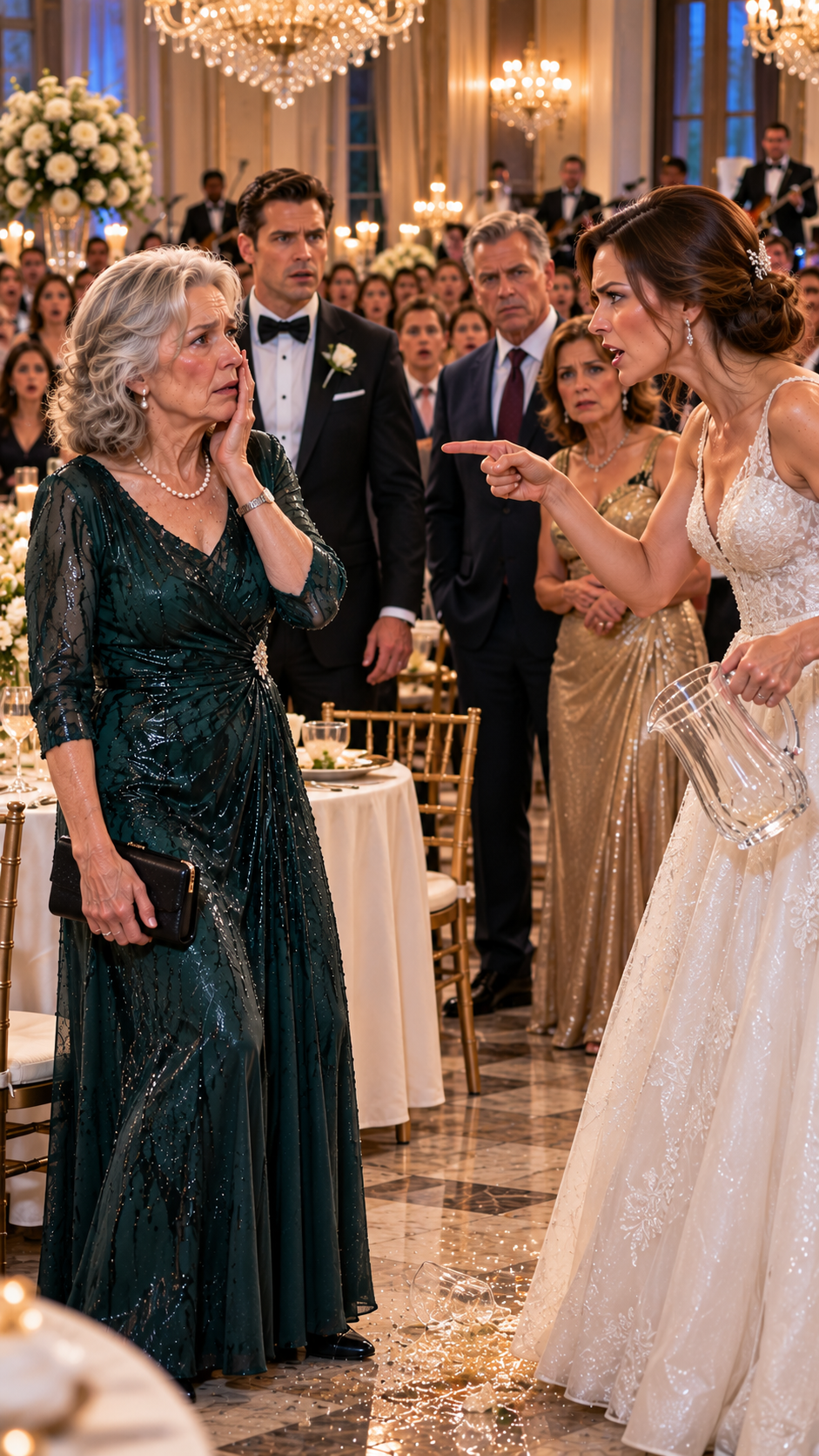
I saw her coming across the ballroom.
Her shimmering white wedding gown moved around her as she walked.
Her expression was tight.
Angry.
Determined.
Her parents followed a few steps behind.
Neither looked embarrassed.
If anything, they seemed entertained.
As though they expected to watch their daughter put me in my place.
Tiffany stopped directly in front of me.
“The bar manager says the Laurent Reserve isn’t being served.”
I nodded.
“That’s correct.”
“Tell them to put it on your card.”
I looked at her.
“No.”
For a moment, she simply stared.
It was as though I had answered in a language she didn’t understand.
“This is my wedding!”
“And I have already paid more than enough.”
Her eyes narrowed.
“My father specifically requested that bottle.”
I looked toward him.
He folded his arms.
Said nothing.
He didn’t offer to pay.
Didn’t explain why the bottle mattered so much.
He simply stood there, waiting for me to surrender.
So I turned back to Tiffany.
“Then your father is welcome to purchase it himself.”
Her smile disappeared.
“You’ve resented this wedding from the beginning,” Tiffany accused.
I took a slow breath.
“I questioned the expenses.”
“You tried to control everything!”
“I paid for everything.”
The words came out more sharply than I intended.
But they were true.
And suddenly, nearby conversations began to stop.
Forks lowered.
People turned in their chairs.
The music continued, but the atmosphere around us had changed.
Tiffany noticed the attention.
Instead of calming down, she raised her voice.
“You’re always trying to make people feel guilty because you have money!”
I stared at her.
Money.
As though I had an endless supply.
As though my savings hadn’t been drained.
As though I hadn’t canceled my dream trip.
As though I hadn’t sold part of the land my husband had left me.
I looked across the ballroom.
Near the dance floor stood my son.
Pale.
Motionless.
Watching.
I met his eyes.
I didn’t need him to choose between his wife and his mother.
I needed him to acknowledge the truth.
To say something.
Anything.
But he remained silent.
Tiffany noticed his silence too.
And instead of frightening her, it seemed to give her permission.
“You’re nothing but a resentful old woman with money,” she spat.
“You promised us a perfect wedding.”
I felt something inside me finally break loose.
Not my temper.
My guilt.
For months, guilt had been the reason I kept paying.
Guilt that my son might be disappointed.
Guilt that I might ruin his special day.
Guilt that saying no would make me seem selfish.
But standing there, surrounded by everything I had sacrificed to provide, I suddenly understood how unreasonable those feelings had become.
“I promised to help,” I said.
Then I looked around the ballroom.
At the flowers.
The chandeliers.
The champagne.
The tables.
The hundreds of guests.
“You kept demanding until there was almost nothing left.”
Tiffany’s face twisted.
“You’re destroying my wedding!”
I almost laughed.
Behind her were flowers I had purchased.
Above her hung chandeliers in a ballroom I had rented.
Around us, 250 guests were eating food purchased partly with money from land my late husband’s family had protected for generations.
And somehow, I was destroying her wedding because I had refused one bottle of champagne.
I met her eyes.
“I have given enough.”
She stared at me.
I repeated the words she seemed unable to accept.
“The answer is no.”
Her hand moved before I saw it coming.
The slap snapped my head sideways.
A sharp sting spread across my cheek.
For a fraction of a second, everything seemed strangely distant.