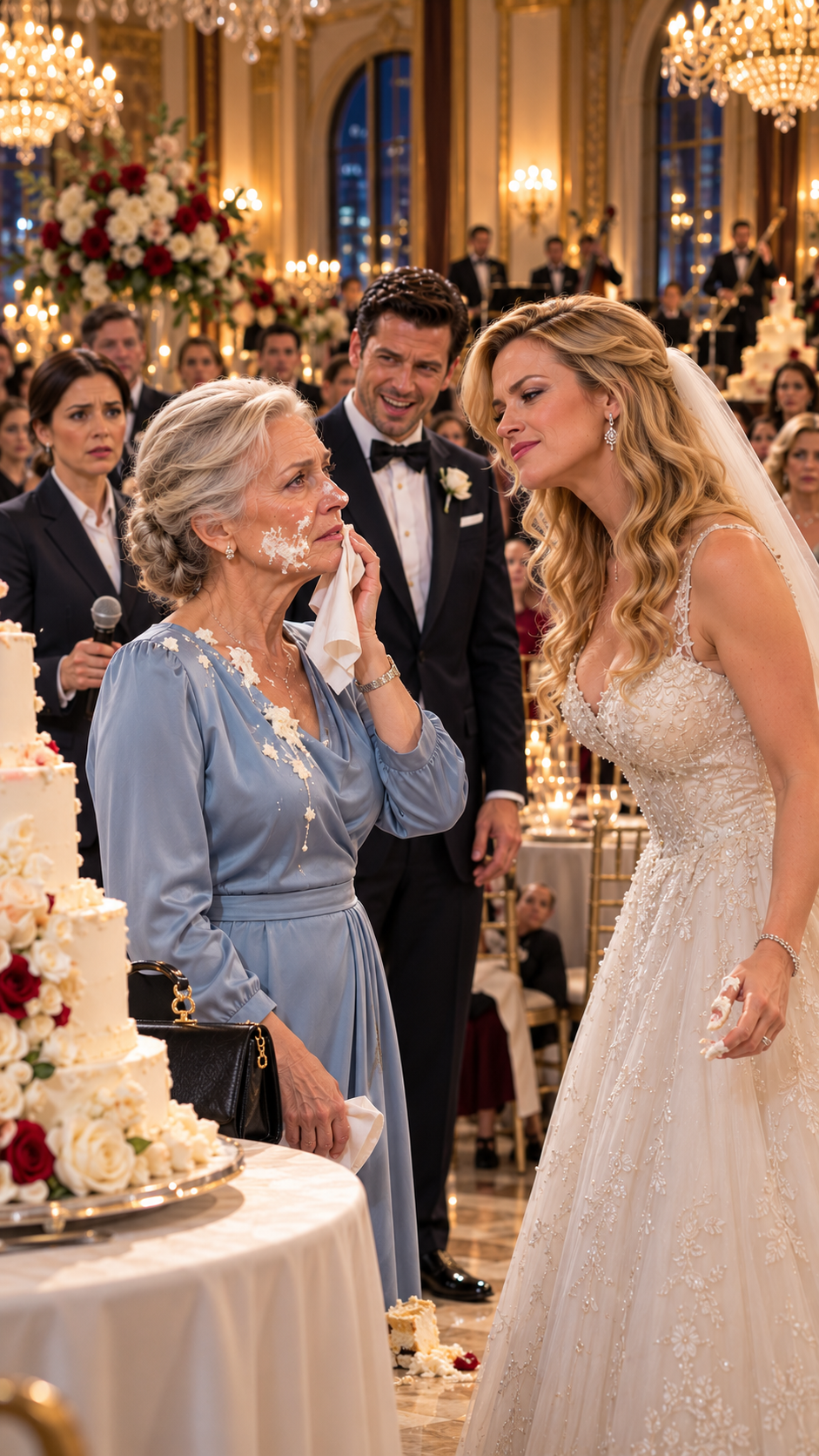
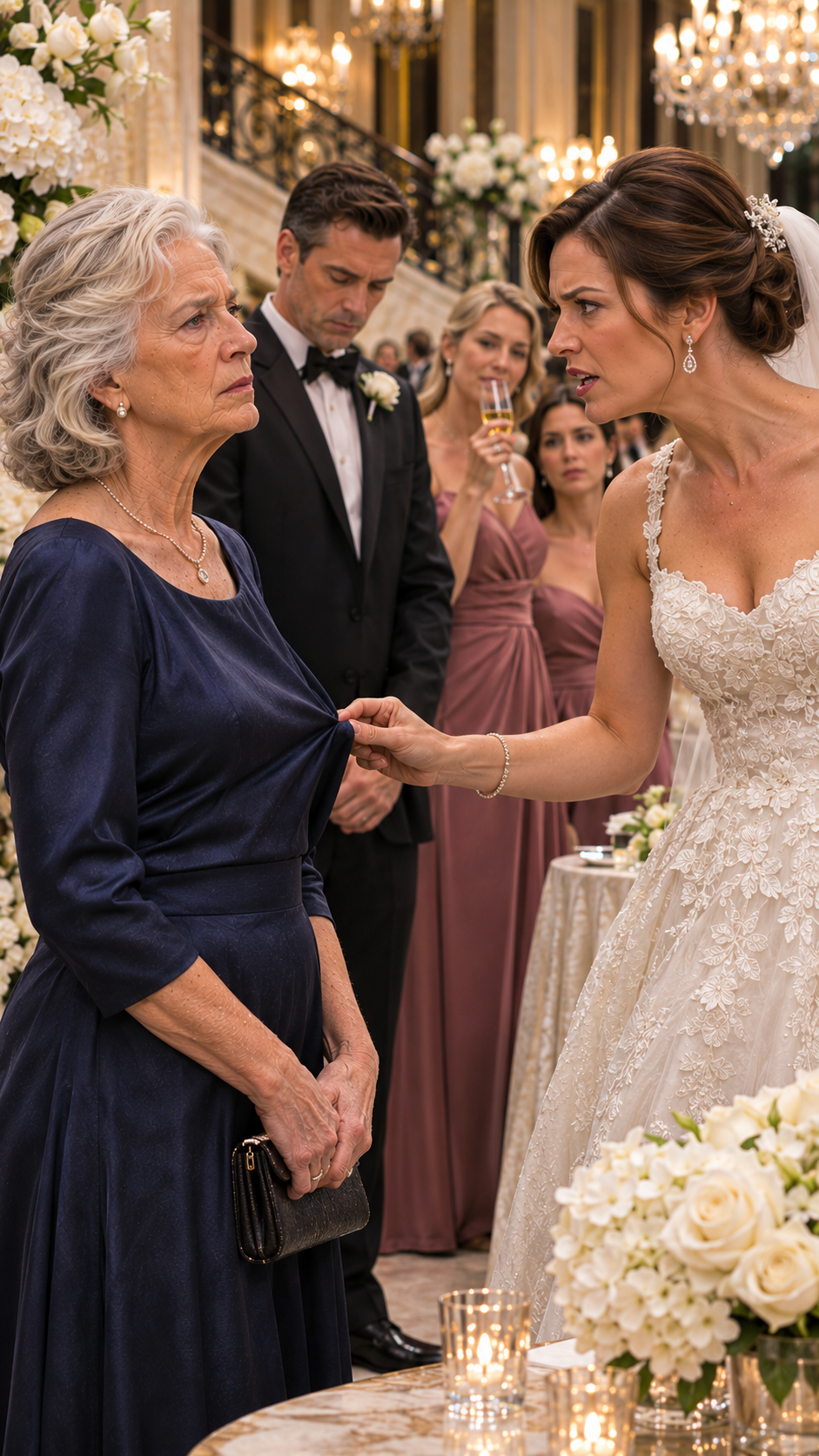
“I’m afraid not.”
“Then reverse it!”
“I cannot do that without authorization from the contracting customer or new arrangements approved by the individual providers.”
“My husband is her son!”
“That does not make him a party to these agreements.”
Her father reached for the paperwork.
“This is ridiculous. We have two hundred and fifty guests here!”
“Yes, sir,” the manager answered. “And our staff will ensure they can depart safely and without unnecessary disruption.”
Tiffany’s voice rose.
“Do you have any idea who my family is?”
The manager paused.
Then he said something that would later be repeated by half the guests.
“I know who signed the contracts, ma’am.”
Across the room, a waiter quietly removed a silver champagne bucket.
The small scraping sound seemed to carry through the entire ballroom.
My son finally spoke.
“Where’s my mother?”
Nobody answered.
Because, for the first time that evening, nobody seemed particularly interested in protecting him from the consequences of his silence.
I was standing beneath the covered entrance when my phone began vibrating.
My son’s name appeared.
I watched the screen until the call ended.
Then it rang again.
And again.
Rain had begun falling beyond the stone steps, thin silver threads illuminated by the driveway lamps.
The evening air smelled of wet roses and freshly cut grass.
My cheek throbbed whenever the cold wind touched it.
I had expected to feel triumphant.
Instead, I felt terribly tired.
A woman in a dark blue staff uniform approached carrying my coat.
“Mrs. Bennett?”
I turned.
She was young, perhaps in her twenties, with a worried expression.
“You left this in the bridal preparation room. I thought you might need it.”
“Thank you.”
She hesitated.
“I saw what happened.”
My fingers stopped against the coat’s lining.
“I see.”
“She shouldn’t have done that.”
Such simple words.
Yet they were the first words of kindness anyone had offered me since the slap.
I looked down because my eyes had suddenly filled.
The young woman waited without speaking.
Then she said, “My mother is about your age. If someone treated her that way…”
Her voice trailed off.
I touched her hand.
“What’s your name, dear?”
“Emily.”
“Thank you, Emily.”
She nodded and returned inside.
I stood there holding my coat, wondering how a stranger could recognize my pain so easily when my own son had refused to see it.
Then the ballroom doors burst open.
“Mom!”
My son hurried toward me.
His tie was loose, and his face had lost all its color.
For one foolish second, I thought he had come to ask whether I was hurt.
Instead, he said, “You have to fix this.”
I stared at him.
Rain tapped against the stone balustrade.
“What?”
“The reception. Tiffany’s losing her mind. Everyone’s leaving. You can’t just cancel everything.”
I looked at his trembling hands.
“Did you come out here to ask how I am?”
He blinked.
“Of course I care how you are.”
“Then ask.”
His mouth opened.
Nothing came out.
I waited.
Finally, he whispered, “Are you okay?”
I moved closer so he could see my cheek beneath the entrance lights.
“Does this look okay?”
His eyes settled on the red mark.
Something changed in his expression.
But he still said, “Tiffany was upset.”
I stepped backward.
He reached toward me.
“Mom, that’s not what I meant.”
“Then tell me what you meant.”
He rubbed his forehead.
“She shouldn’t have hit you. I know that. But canceling the wedding isn’t going to help.”
“The wedding already happened,” I said. “You are married. I canceled services I was paying for.”
“People are going to talk.”
“They watched your wife strike me. They were already going to talk.”
He lowered his head.
For a moment, the only sound between us was rain.
Then he said, “Please. Just come inside. We can apologize and finish the evening.”
“We?”
He looked confused.
“Mom—”
“Who is supposed to apologize?”
He swallowed.
And once again, I watched my son struggle to say the simplest thing in the world.
That his wife had been wrong.
That I had deserved better.
That he had failed me.
I stepped around him.
“Go back to your wife.”
“Mom, wait.”
I stopped.
His voice cracked.
“I don’t know what to do.”
I turned toward him.
“Neither did I, when she hit me.”
Then I walked away.
I had almost reached the parking area when I heard another voice.
“Margaret!”
Tiffany’s father came striding through the entrance with his wife close behind.
His expensive suit jacket was unbuttoned, and his face was flushed.
“This nonsense ends now.”
I remained beside my car.
“Good evening.”
“Don’t play games. You are humiliating our family.”
I looked at him for a long moment.
“Your daughter slapped me.”
He waved his hand dismissively.
“Emotions were running high.”
“Then perhaps you should have helped her control them.”
His wife stepped forward.
“Margaret, dear, we all need to be reasonable.”
I almost smiled at the word.
Reasonable.
I had been reasonable through every expanded guest list, every new invoice, every unnecessary luxury.
And apparently reasonableness meant continuing to pay after being assaulted.
Tiffany’s father extended his hand.
“Give me the manager’s number. I’ll straighten this out.”
“You’re welcome to arrange and pay for whatever services are still available.”
His hand dropped.
For the first time, he seemed uncertain.
“We shouldn’t have to pay twice.”
“You haven’t paid once.”
His wife inhaled sharply.
He stared at me.
Then he said, “You’re going to regret making enemies of this family.”
I opened my car door.
“No,” I answered. “I regret how much I paid to become part of your celebration.”
I got inside and locked the door.
He stood under the entrance lights, staring through the glass.
I started the engine.
And drove away before he could say another word.
By the time I reached home, the rain had become a steady downpour.
I parked in the driveway and sat with both hands resting on the steering wheel.
My house was dark except for the small lamp beside the living room window.