I had left it burning that morning.
Back when I believed I would return with beautiful memories.
I entered quietly.
My husband’s photograph stood on the mantel.
He was smiling in it, his eyes narrowed against the sunlight, one hand resting on the fence surrounding our land.
I placed my purse on the table.
Then I sat beneath the photograph and began to cry.
Not loudly.
Not dramatically.
The tears simply came, one after another, while the refrigerator hummed in the kitchen.
I cried for the woman who had spent months convincing herself that love required endless sacrifice.
I cried for the land I had sold.
For the vacation I had canceled.
For the boy my son had once been.
And for the man he had become.
Eventually, I reached for my phone.
There were twenty-three missed calls.
Several messages from my son.
And one from Tiffany.
You destroyed the most important day of my life. I hope you’re proud of yourself.
I read it twice.
Then I turned off the screen.
A minute later, another message arrived.
This one came from an unfamiliar number.
Mrs. Bennett, my name is Sarah. I was photographing the wedding. I have something important you should see. Please contact me when you’re ready.
I stared at the message.
Something important.
I was too exhausted to understand what that might mean.
But before I could set down the phone, another notification appeared.
It was from the venue manager.
Mrs. Bennett, I apologize for contacting you so late. During our final account review, we discovered an attempted authorization involving your payment information. I believe you should speak with us before any further charges are processed.
I sat upright.
My tears stopped.
And suddenly, the wedding was no longer the only thing I needed to understand.
The following morning, I sat across from the manager in a quiet office at Briarwood.
A pale strip of sunlight fell across his desk.
Beside him sat the venue’s accounts supervisor.
They had prepared copies of the original contracts, the final invoices, and several amendment requests.
The manager looked uncomfortable.
“Mrs. Bennett, we have not processed any unauthorized charges. Our controls prevented that. But we found something concerning.”
He slid a document toward me.
It was a request to upgrade the bar package.
The amount was $6,800.
I stared at the figure.
“I never approved this.”
“We know,” he replied. “The request was submitted using an email address that closely resembled yours, but it did not match the verified address on your account.”
My stomach tightened.
The supervisor placed another document beside it.
A request for an extended suite reservation.
Then another.
Additional transportation.
Premium gifts for Tiffany’s parents.
An upgraded farewell brunch.
Together, the proposed additions exceeded eleven thousand dollars.
I looked at the signature field.
Someone had typed my name.
Not signed it.
Typed it.
As though my identity were another convenient detail that could be copied into a form.
“Who submitted these?” I asked.
The manager hesitated.
“The correspondence came from an account identifying the sender as Tiffany. She represented that she was acting with your approval.”
I leaned back.
For a moment, the office seemed strangely distant.
I had spent months saying yes to requests I could barely afford.
But apparently even my yes had not been enough.
Tiffany had begun trying to give it for me.
“Did my son know?”
“We cannot determine that from these records.”
I folded my hands together.
They were shaking.
The manager continued.
“Our staff requested confirmation directly from you. None was received. That is why the charges were held.”
I remembered several missed emails during the final hectic week before the wedding.
Messages I had barely glanced at because I was exhausted from organizing everything.
Now I understood how close I had come to another financial disaster.
“May I have copies?”
“Of course.”
I placed the documents carefully inside my purse.
Then I asked for the photographer’s number.
Sarah met me that afternoon at a small café.
She arrived carrying a laptop and a canvas camera bag.
“I wasn’t sure whether to contact you,” she admitted. “But I couldn’t stop thinking about what happened.”
She opened her computer.
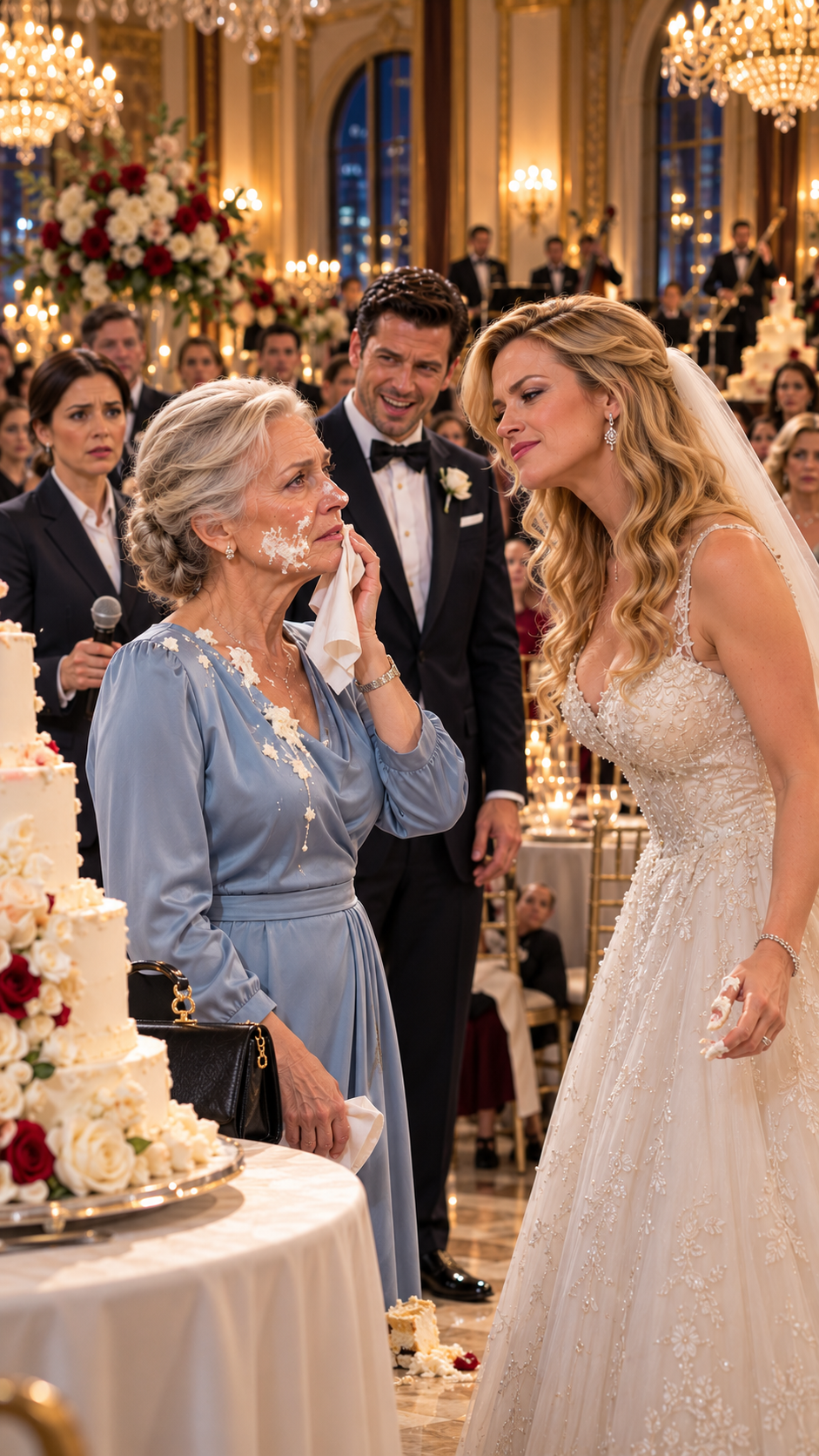
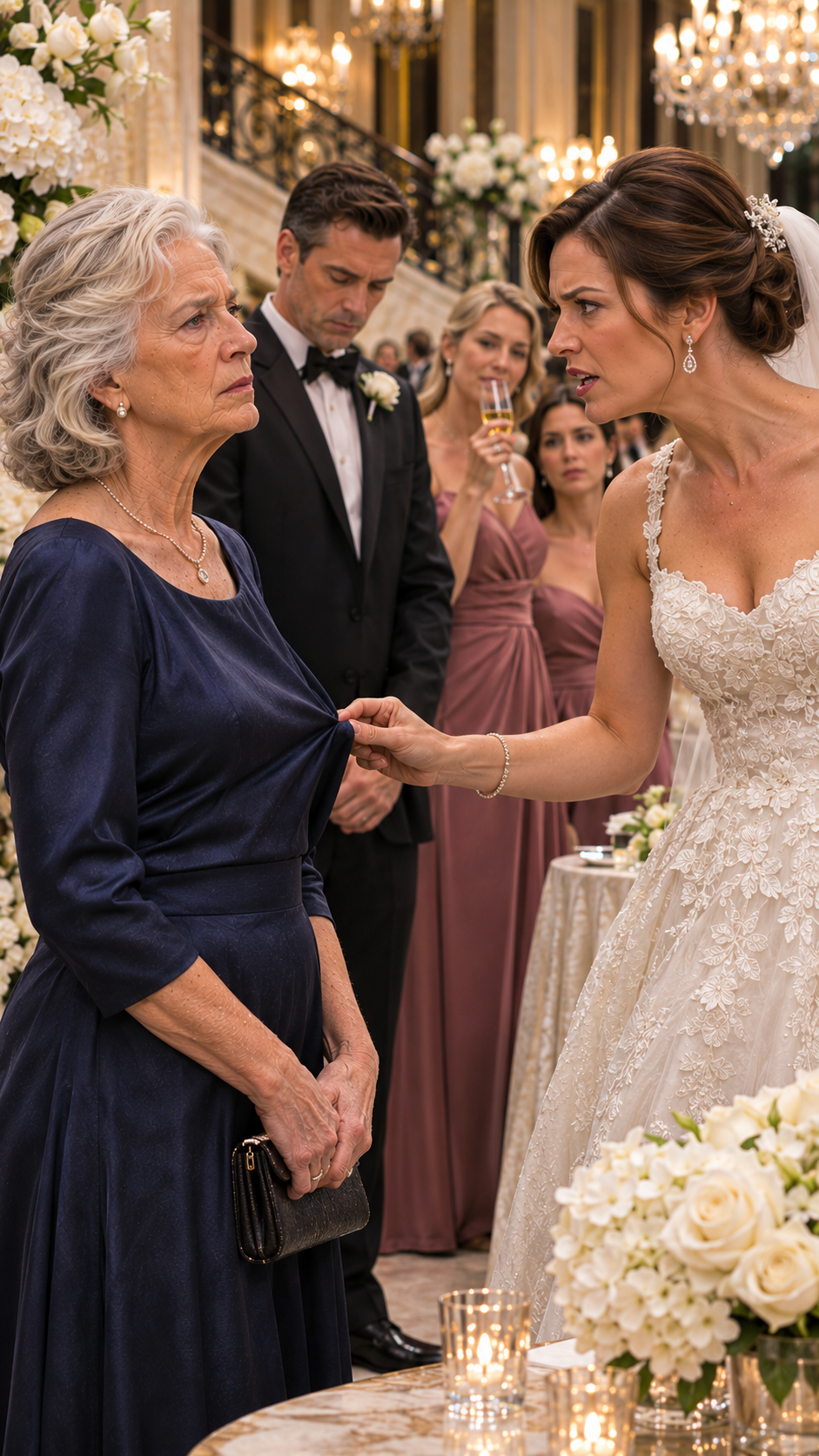
The first video showed the ballroom moments before Tiffany struck me.
I watched myself standing beneath the chandeliers.
I watched Tiffany approach.
I watched her father stand nearby.
And then I saw something that made my breath catch.
My son.
He was watching the argument.
But when Tiffany raised her hand, he didn’t merely fail to react afterward.
He saw it coming.
His shoulders tightened.
He took half a step forward.
Then stopped.
I pressed my fingertips against my mouth.
Sarah paused the video.
“I’m sorry.”
“Please continue.”
She played the next few seconds.
The slap.
The silence.
My face turning away.
Tiffany ordering me out.
And my son lowering his eyes.
Seeing it from the outside was worse than remembering it.
Because I could no longer soften the memory.
I could no longer tell myself that perhaps he had been confused or had not understood what was happening.
He had understood.
He had simply chosen not to intervene.
Sarah closed the laptop halfway.
“There’s something else.”
She opened a second recording.
It had been captured during the afternoon preparations, when the photographer was filming candid moments.
Tiffany was standing beside her father near a doorway.
They hadn’t noticed the camera across the room.
Her father said something about the champagne.
Tiffany laughed.
“Don’t worry. Margaret always caves eventually.”
“And if she doesn’t?”
Tiffany adjusted her earrings.
“Then I’ll make sure everyone knows she’s the problem. He’ll back me up.”
Her father smiled.
“That’s my girl.”
The recording ended.
I sat very still.
A spoon clinked against a cup behind me.
Someone laughed near the café entrance.
Life continued around our table as though nothing extraordinary had happened.
But for me, something had broken permanently.
The humiliation at the wedding had not been a sudden misunderstanding.
Tiffany had anticipated my resistance.
And she had counted on my son’s loyalty to protect her from consequences.