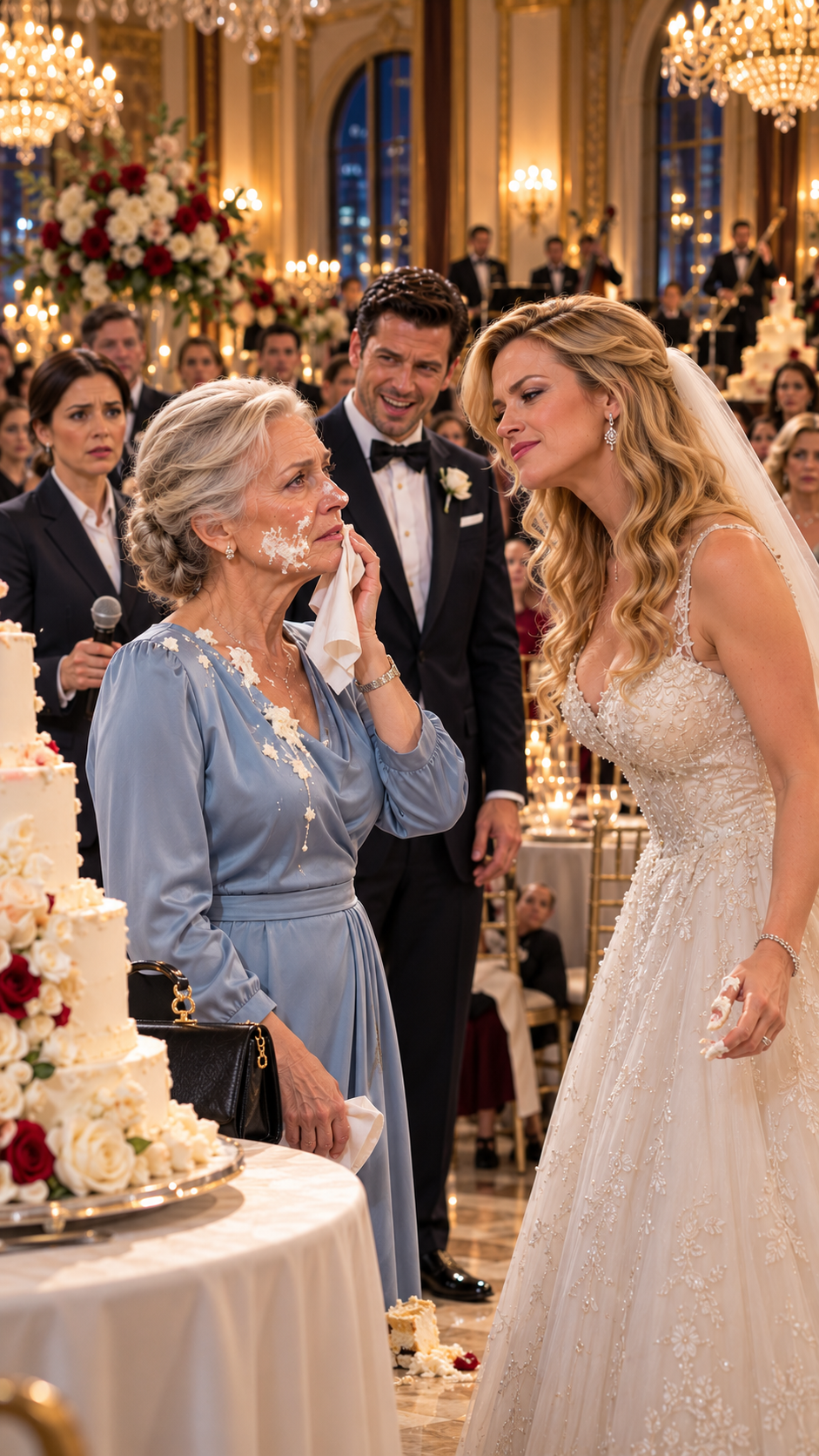
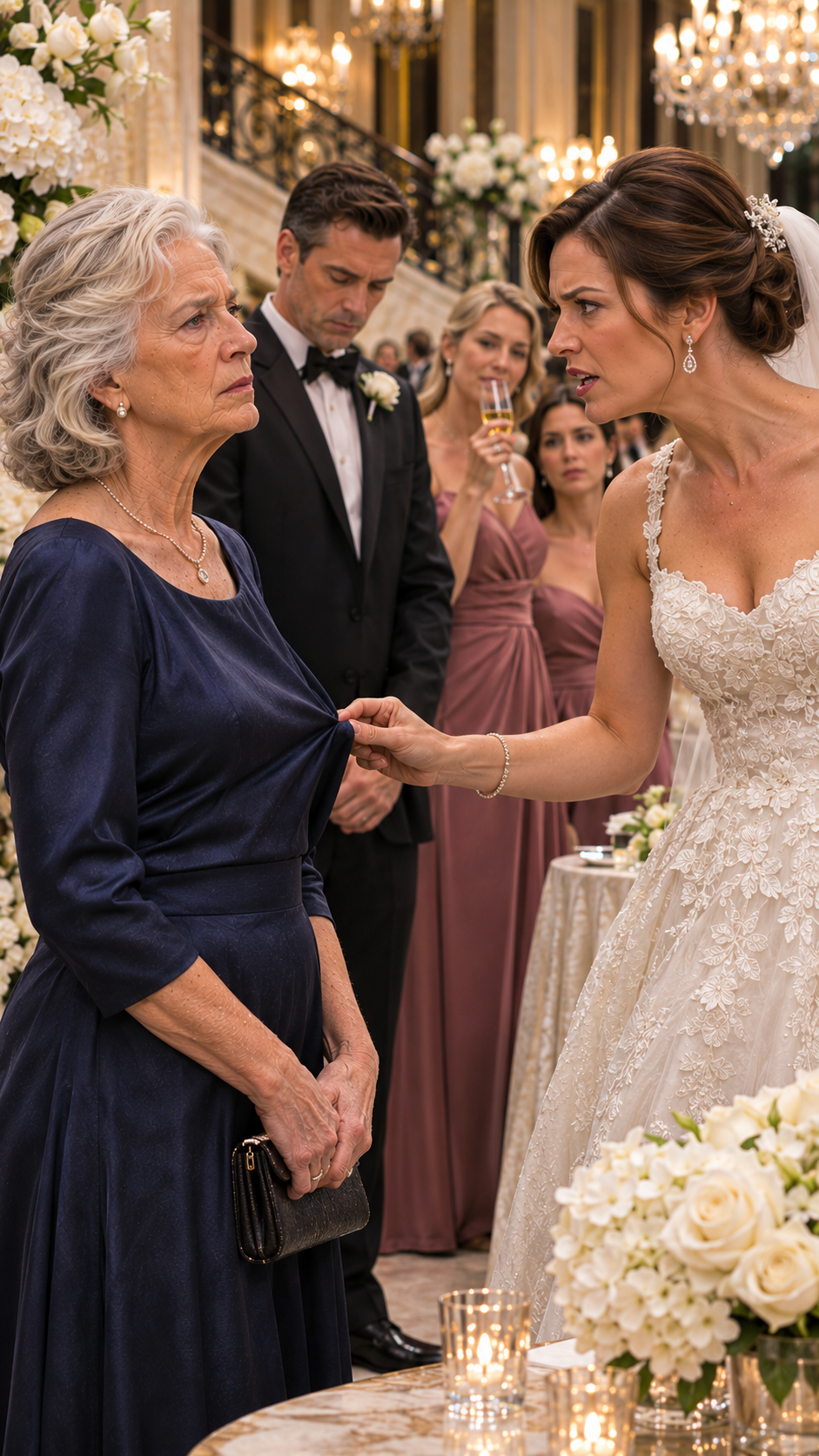
“You are mistaken, Tiffany. I spent months surrendering control because I wanted you both to be happy.”
I placed my hand against the table.
“You struck me. You tried to authorize expenses in my name. You humiliated me in front of everyone who attended your wedding. And even now, you have not once asked whether you hurt me.”
Her lips parted.
For one moment, I thought she might finally understand.
Instead, she said, “You deserved to be embarrassed.”
My son stood.
“That’s enough.”
Tiffany turned toward him.
He removed his wedding ring.
And placed it on the table.
The tiny metallic sound seemed impossibly loud.
“I can’t pretend I didn’t hear that.”
Tiffany stared at the ring.
“You’re joking.”
He shook his head.
“I need to leave.”
Her expression collapsed into disbelief.
“You can’t abandon me over one mistake.”
He looked at her.
“It wasn’t one mistake.”
And this time, he walked away before she could tell him to stay.
Tiffany did not fall apart immediately.
She became angry.
She threatened to sue me for ruining her wedding.
She accused the venue of discrimination.
She told relatives that I had sabotaged the reception out of jealousy.
But the guests had seen the slap.
Several had recorded it.
And Sarah’s footage established what happened before and afterward.
My attorney reviewed the attempted financial authorizations and helped me formally dispute them, preserve the records, and protect my accounts.
I also made a police report about the assault.
The process was neither quick nor glamorous.
There were interviews.
Documents.
Difficult conversations.
And moments when I wished I could forget the entire thing.
Eventually, Tiffany accepted responsibility for the assault through the legal process, with consequences that included a financial penalty and court-ordered counseling.
The attempted charges were never completed, but the documented requests ended any possibility of my trusting her with financial matters again.
Her father’s threats proved empty.
His social circle had witnessed enough of the wedding to know the truth.
People stopped inviting him to boast about the extravagant celebration he had supposedly arranged.
Several relatives quietly told me they had assumed he was paying for it.
That discovery embarrassed him more than any argument I could have made.
Tiffany’s marriage also began unraveling.
My son moved into a small apartment.
They attended counseling separately and tried several conversations together.
But Tiffany remained convinced that her greatest injury was losing the reception she had wanted.
When my son asked her to acknowledge the harm she had caused, she told him he should have protected her from his mother.
He finally understood that an apology cannot repair a relationship when the person offering it refuses to accept responsibility.
Months later, their marriage ended.
I did not celebrate.
A broken marriage was not what I had wanted for my son.
But I also refused to mourn the disappearance of a relationship that had demanded my humiliation as the price of keeping it intact.
The hardest conversation came on a Sunday afternoon.
My son arrived carrying a wooden box.
It had belonged to his father.
Inside were old photographs, a pocket watch, and several letters.
He placed it on the kitchen table.
“I found these while moving.”
I lifted the lid.
There was a photograph of my husband standing beside our son when he was a child.
They were on the family land.
The boy was laughing.
His father had one arm around his shoulders.
My son touched the photograph.
“Mom, I didn’t know you sold part of the property.”
I looked away.
“I didn’t want you to feel guilty.”
He inhaled sharply.
“You sold Dad’s land for our wedding?”
I nodded.
He sat down slowly.
For a long time, neither of us spoke.
Then he whispered, “Why didn’t you tell me?”
“Because I thought you’d ask me not to.”
He looked up.
“I would have.”
“I know.”
The words surprised both of us.
I folded my hands.
“That’s what makes it so difficult. I knew you didn’t need that wedding. I knew it wasn’t what you wanted. But I kept paying because I was afraid of disappointing you.”
He wiped his eyes.
“And I kept asking because I was afraid of disappointing Tiffany.”
We sat in silence.
Two people who had spent months making choices out of fear.
And calling those choices love.
Finally, he said, “I can’t give you back what you lost.”
“No.”
“But I can stop asking you to lose more.”
I reached across the table.
He took my hand.
I did not tell him everything was forgiven.
Not yet.
Instead, I said, “If we’re going to rebuild this relationship, we have to be honest with each other. Even when honesty is uncomfortable.”
He nodded.
“I want that.”
“Then we start there.”
Rebuilding was slower than either of us expected.
My son began visiting once a week.
Not to ask for money.
Not to complain about his life.
Simply to spend time with me.
At first, our conversations were awkward.
He would offer to wash the dishes.
I would insist I could manage.
He would ask whether I needed groceries.
I would say no.
We were learning how to be mother and son without the old arrangement in which I gave everything and he accepted it.
Sometimes he brought dinner.
Sometimes we walked through the neighborhood.
Sometimes we sat quietly watching old movies his father had loved.
One evening, he apologized again.
I was cutting vegetables when he said, “I keep remembering your face after she hit you.”
My knife stopped.
He continued.
“You looked at me like you were waiting for me to become someone better.”
I set the knife down.
“I was waiting for you to become yourself.”
He lowered his head.
“I don’t know if I can forgive myself.”
I turned toward him.
“Then don’t make forgiveness your goal.”
He looked confused.
“Make becoming trustworthy your goal.”
He nodded slowly.
And over time, he began doing exactly that.
He paid his own bills.
He stopped asking me to solve problems he could solve himself.