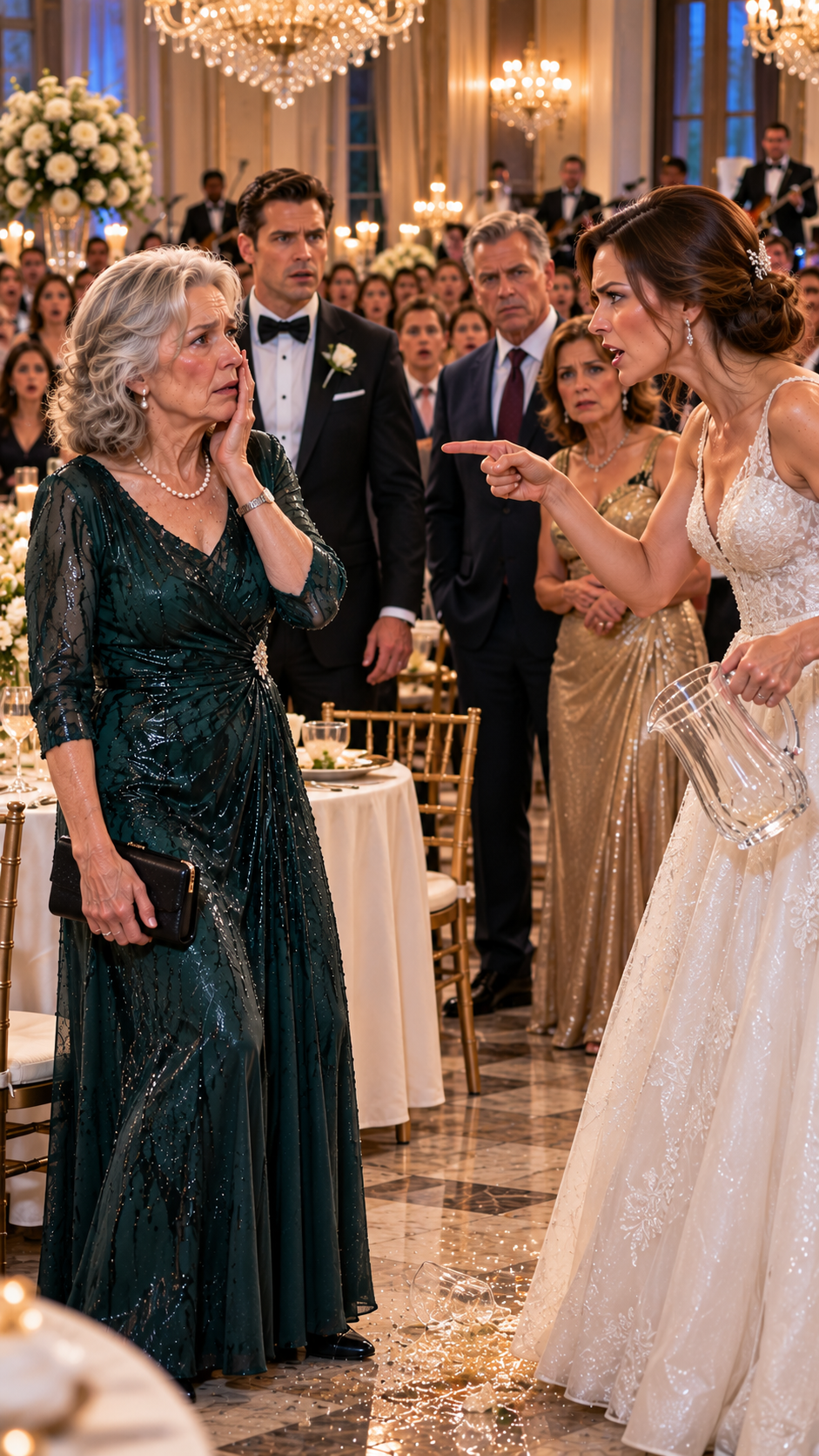
“She did.”
He paused.
“But this afternoon, our legal department received information suggesting someone retained copies of documents that were supposed to remain confidential.”
I stared at the dark window.
“Are you saying Kendra took them?”
“I’m not making that accusation.”
His voice softened.
“I’m asking whether she mentioned being contacted by anyone about those records.”
I thought about the gathering earlier that evening.
Kendra’s trembling hands.
Her public apology.
The way she’d finally spoken about her mistakes without blaming me.
“No,” I said.
“She hasn’t mentioned anything.”
Martin exhaled.
“Then I think you should speak with her.”
“Why?”
A long silence followed.
“Because someone is attempting to use her old misconduct to pressure Hawthorne.”
The words struck me like cold water.
I gripped the table.
“What?”
“I can’t discuss the details over the phone. Our counsel has already contacted Hawthorne’s legal department.”
I stared toward the mantel.
The photograph.
The scholarship ceremony.
The evening I’d believed had finally closed the wound.
“Martin, is my daughter in trouble again?”
“I don’t know.”
He paused.
“But whoever is involved has referred specifically to your name.”
I closed my eyes.
Then I heard him say something that made my stomach drop.
“And to the scholarship announced today.”
I called Kendra immediately.
She answered on the fourth ring.
“Mom?”
Her voice sounded tired.
“Kendra, where are you?”
“At home. Why?”
I took a breath.
“Martin Hale just called me.”
Silence.
Then a faint sound.
Something being set down on a hard surface.
“Kendra?”
She whispered, “What did he say?”
I closed my eyes.
“You know why he called.”
She didn’t answer.
I heard Grant in the background.
“Kendra? Who is it?”
She spoke away from the phone.
“It’s Mom.”
Then she returned.
“Mom, I was going to tell you.”
My chest tightened.
“Tell me what?”
Her breathing became uneven.
“That someone contacted me.”
I sat down slowly.
“Who?”
“A man who used to work with my department at Elevanta.”
“What did he want?”
She hesitated.
“Copies of the old reports.”
I stared at the wall.
“Did you give them to him?”
“No.”
Her answer came quickly.
Then she added, “But he said he already had them.”
I pressed my fingers against my forehead.
“What was he threatening?”
Kendra began crying.
“He said if I didn’t help him, he’d make sure everyone knew I hadn’t told the whole story.”
The hallway seemed to grow colder.
I remembered the night of my retirement celebration.
The pitcher.
The laughter.
The confession.
The consequences.
And the difficult year it had taken us to rebuild something resembling trust.
“Kendra,” I said carefully, “did you tell the whole story?”
She didn’t answer.
I closed my eyes.
“Sweetheart.”
Her voice broke.
“I thought I had.”
I stared at the phone.
“What does that mean?”
A long silence followed.
Then she whispered, “There was one more person involved.”
I didn’t sleep that night.
Not because I was afraid of losing my reputation.
I’d spent thirty-eight years learning that reputations were built through actions, not rumors.
But I was afraid of what another hidden truth might do to my daughter.
And I was afraid of discovering that the reconciliation we’d worked so hard to build rested on another omission.
Kendra and Grant arrived shortly after seven the following morning.
The sky over Tulsa was pale gray.
Rain tapped against the kitchen windows.
Grant carried a thick envelope.
Kendra looked exhausted.
Her hair was pulled into a loose ponytail.
She wore jeans and a plain sweater.
Nothing about her resembled the furious woman who had stood beneath the Grand Meridian chandeliers.
But when she saw me, she stopped in the doorway.
“Mom.”
I stepped aside.
“Come in.”
Grant nodded.
“Loretta.”
I offered them coffee.
Neither wanted any.
We sat at the kitchen table.
For several moments, nobody spoke.
Then Kendra placed her hands flat against the wood.
“I need to tell you something I should have told you a year ago.”
I looked at her.
“I’m listening.”
She swallowed.
“The reporting changes were my decision.”
I nodded.
“I know.”
“But I wasn’t the only person who knew.”
Grant opened the envelope.
Inside were printed emails.
Kendra continued.
“My department’s senior director knew the numbers were being moved between reporting periods.”
I frowned.
“Who?”
She looked down.
“Victor Lang.”
I recognized the name.
Victor had attended several industry conferences.
He was ambitious.
Polished.
The kind of executive who spoke confidently about transparency while carefully avoiding difficult questions.
Kendra continued.
“He told me the delayed contracts were practically guaranteed.”
I waited.
“He said everyone adjusted projections when a quarter was difficult.”
I felt my stomach tighten.
“And you believed him?”
She nodded.
“I wanted to.”
Her voice trembled.
“He told me I was ready for bigger responsibilities. That if I handled the reporting problem, he’d recommend me for another promotion.”
I stared at her.
“Did he instruct you to change the figures?”
Kendra hesitated.
“He never wrote those exact words.”
Grant slid an email toward me.
The subject line concerned quarterly reporting.
Victor’s message was brief.
We need the presentation to reflect the growth leadership expects. Resolve the timing issues before the board review.
I read it twice.
Then looked up.
“That doesn’t excuse what you did.”
Kendra nodded immediately.
“I know.”
She swallowed.
“I made the changes. I approved the submission. And when the audit began, I panicked.”
I looked toward the remaining papers.
“Then why didn’t you tell investigators about Victor?”
Her face crumpled.
“Because he told me he’d deny everything.”
I waited.
“And because he said if I dragged him into it, he’d make sure I never worked in the industry again.”
The kitchen fell silent.
Rain slid down the window.
Kendra wiped her face.
“I thought if I admitted my part, accepted being fired, and started over, it would end.”
I stared at her.
“But he contacted you again.”
She nodded.
“He called two weeks ago.”
Grant’s jaw tightened.
“He wanted Kendra to provide a statement saying she’d used your name because Hawthorne had informally encouraged Elevanta’s reporting approach.”