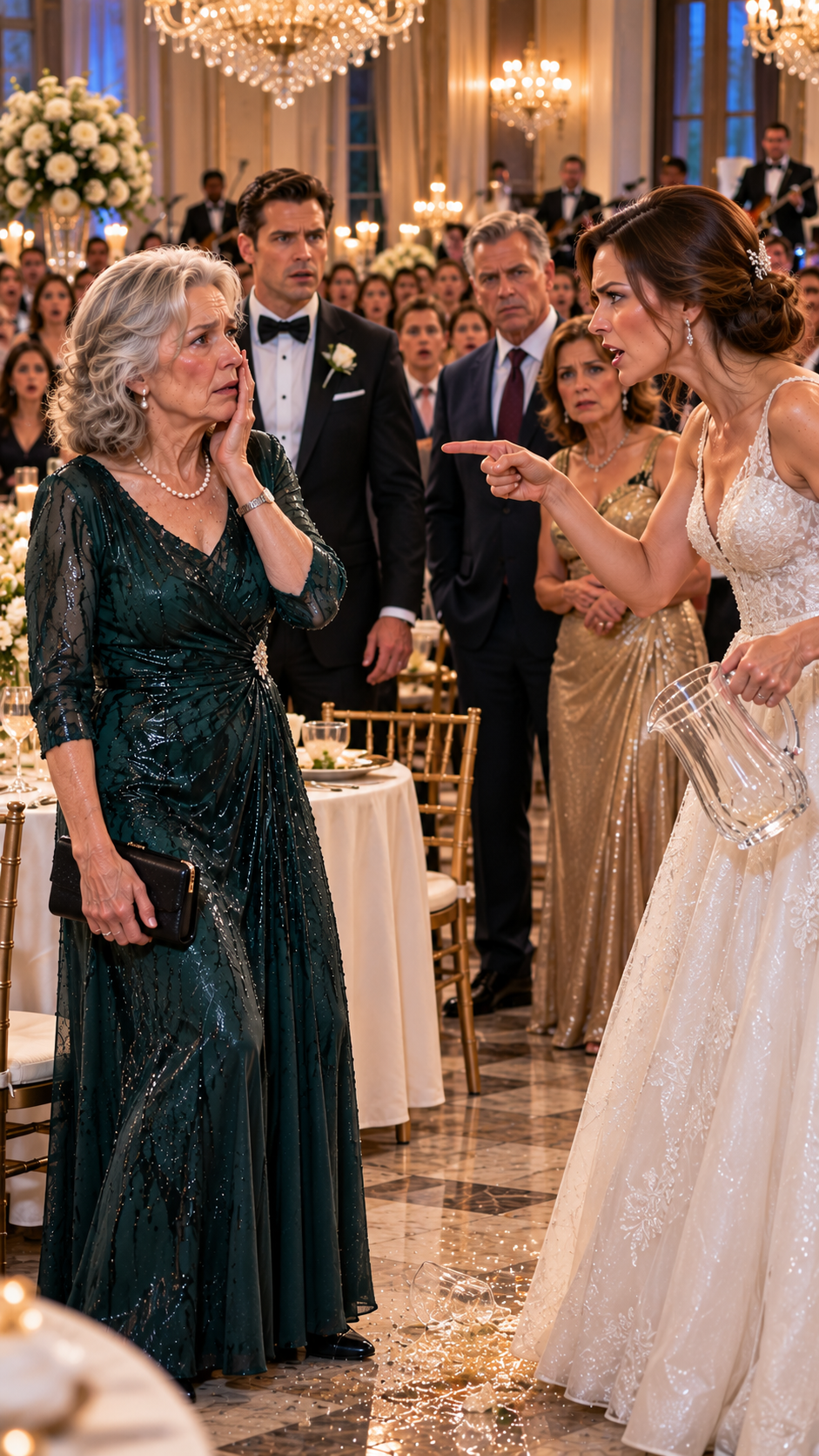
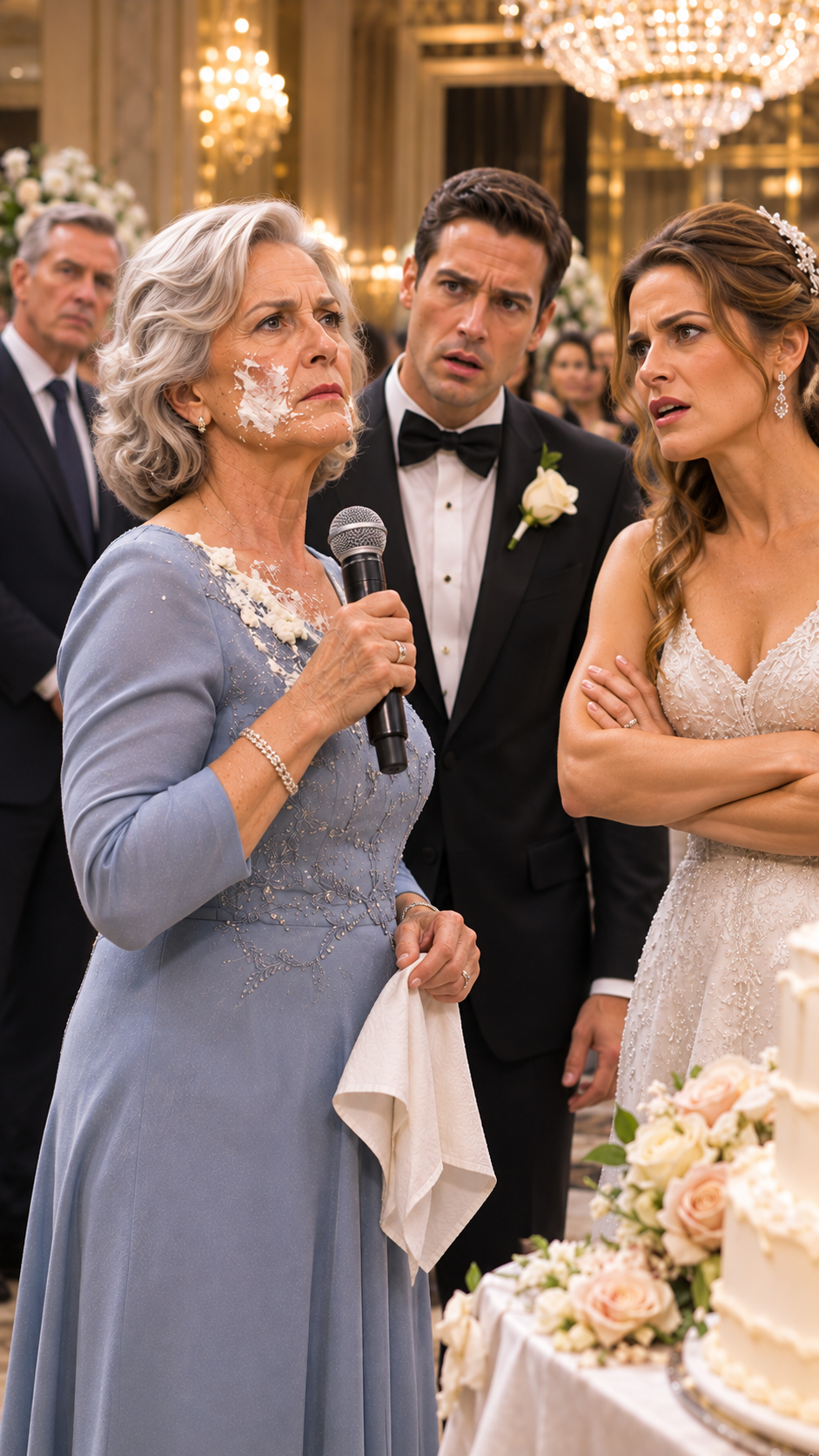
“You’re going to need this more than I will.”
She looked down at it.
Her fingers tightened around the fabric.
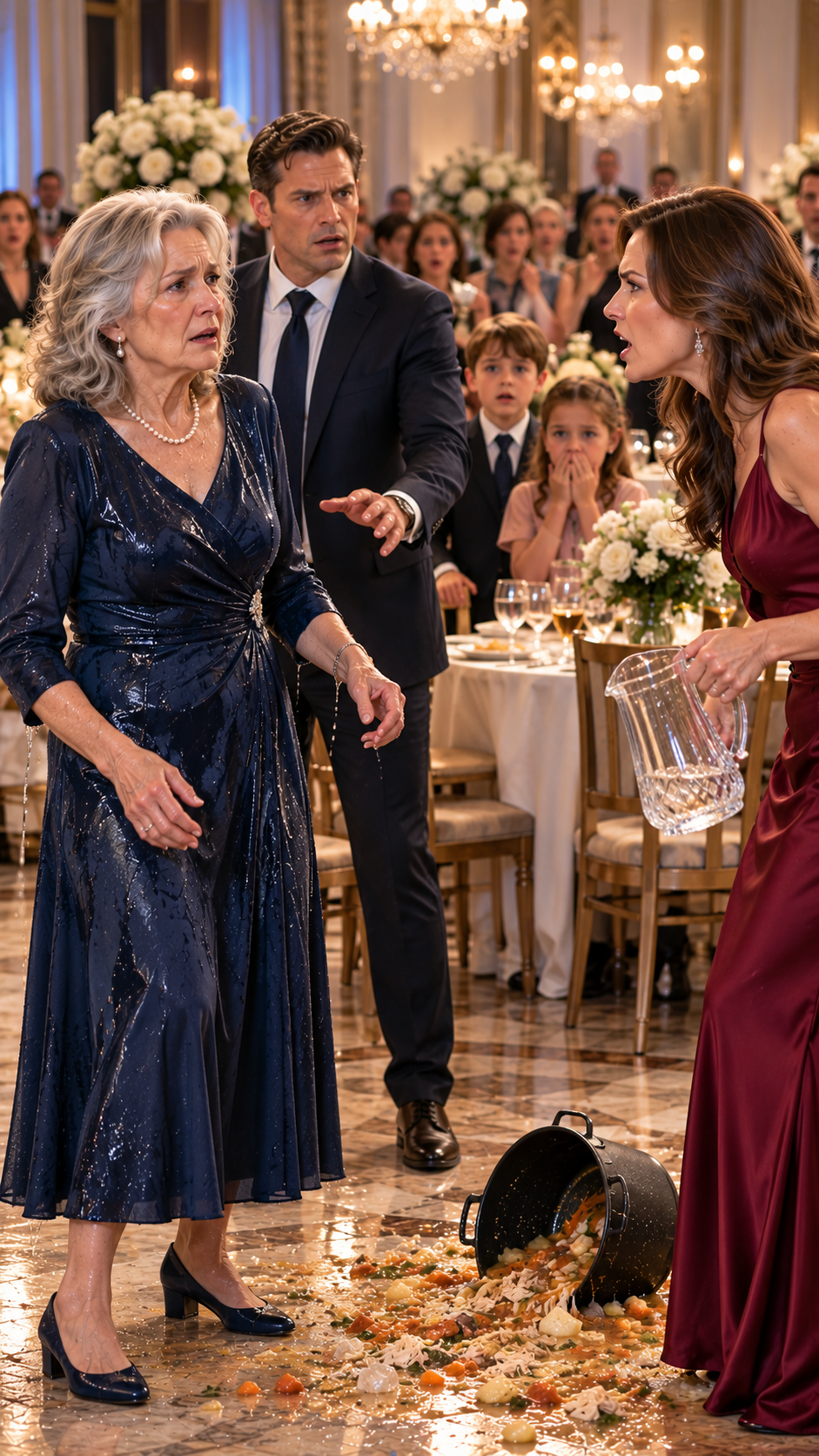
And for the first time since she had poured that pitcher over my head, my daughter looked as though she might cry.
Grant took another step forward.
“Kendra,” he said quietly, “tell her.”
I stood motionless beneath the chandeliers, water still dripping from the hem of my navy-blue dress.
Nearly two hundred people had come to celebrate the end of my career.
But as I watched my daughter struggle to meet my eyes, I realized we were standing at the beginning of something neither of us had expected.
Because Kendra hadn’t humiliated me simply to destroy my retirement celebration.
She was terrified of losing the career she’d spent eight years building.
And whatever Grant knew about that fear was about to change everything.
Grant reached into the inside pocket of his jacket.
Kendra caught his wrist.
“Don’t.”
Her voice was so low that I almost missed it.
But I saw the movement.
The desperation in her fingers.
The way her knuckles whitened against his dark sleeve.
Grant looked down at her hand.
Then slowly back at her face.
“Kendra, I love you.”
She shook her head.
“Then don’t do this.”
He swallowed.
“I’ve spent three weeks trying to help you find a way to tell the truth.”
Around us, guests began shifting uncomfortably.
A server stood beside the nearest table, holding a tray of untouched coffee cups.
Howard Sutter approached from the far side of the ballroom.
His expression was grave.
“Loretta,” he said gently, “would you like us to clear the room?”
I looked at the people watching.
My colleagues.
My friends.
The people who had come to honor thirty-eight years of work.
They had already witnessed enough humiliation.
I took a slow breath.
“Yes, Howard.”
Then I looked at Kendra.
“But I want my family to stay.”
Howard nodded.
He stepped toward the microphone near the stage.
“Ladies and gentlemen, thank you for your patience. We’re going to take a short break. Please enjoy refreshments in the adjoining reception area.”
Nobody moved immediately.
Then chairs began scraping.
Guests rose.
Quiet conversations started.
Some people glanced at me with concern.
Others looked away, trying to give us privacy.
A woman I’d worked with for twenty-two years approached and touched my elbow.
“Loretta, honey, are you all right?”
I managed a small smile.
“I’m going to be.”
She squeezed my hand.
Then followed the others.
Within minutes, the enormous ballroom had become almost empty.
Only Howard, Travis, Kendra, Grant, and I remained near the head table.
A hotel manager stood discreetly beside the entrance.
The chandeliers continued glowing.
The music had stopped.
And beneath my feet, the carpet was damp where the ice water had spilled.
Howard removed his suit jacket.
“Loretta, please.”
I accepted it.
The fabric was warm from his shoulders.
“Thank you.”
Then I turned toward my daughter.
“All right, Kendra.”
She stared at the towel in her hands.
“Tell me.”
Grant finally removed a folded document from his pocket.
Kendra looked as though she might be sick.
“Grant, please.”
He stopped.
Then handed the paper to her instead of me.
“It’s your decision whether to explain it,” he said. “But I’m not going to help you blame your mother.”
Kendra stared at him.
Her lower lip trembled.
Then she looked toward the empty ballroom.
“They think I manipulated the numbers.”
My stomach tightened.
“What numbers?”
She swallowed.
“Quarterly performance figures.”
Howard remained silent.
I stepped closer.
“What happened?”
Kendra’s eyes filled.
“Our department missed its targets.”
I waited.
“Two major contracts were delayed. Another client reduced its order. The numbers were terrible.”
Her voice became unsteady.
“I was supposed to present the results to senior leadership.”
I nodded slowly.
“And?”
She looked down.
“I changed the reporting assumptions.”
The room went still.
Travis stared at her.
“What does that mean?”
Kendra pressed the towel against her stomach.
“It means I counted revenue we hadn’t actually earned yet.”
I felt a cold heaviness settle beneath my ribs.
“Kendra.”
She began speaking faster.
“I thought the contracts would close before anyone noticed. I thought the next quarter would fix everything.”
Grant closed his eyes.
She looked toward me.
“I wasn’t stealing money.”
“I didn’t say you were.”
“But everyone acts like I committed some terrible crime!”
I held her gaze.
“Did you knowingly submit inaccurate figures?”
Her mouth opened.
Then closed.
Finally, she nodded.
“Yes.”
The answer was barely audible.
I looked toward the document.
“And the review?”
Kendra’s hands shook.
“Internal audit found discrepancies.”
Grant spoke quietly.
“They asked her to preserve the original records and explain what happened.”
I turned toward him.
“Did she?”
He hesitated.
Kendra whispered, “Not completely.”
I stared at her.
She looked away.
And suddenly I understood why Grant had been so frightened.
This wasn’t simply about a bad quarter.
It was about what my daughter had done afterward.
“Kendra,” I said, “what did you tell the auditors?”
She began crying.
“I told them the reporting method had been reviewed informally.”
“By whom?”
She looked at me.
The answer was already there.
I could see it in her face.
My throat tightened.
“By me?”
She nodded.
Travis swore under his breath.
Howard took one slow step backward.
I stared at my daughter.
“You told Elevanta I had reviewed your figures?”
Kendra shook her head quickly.
“Not exactly.”
“Then explain.”
“I said I’d discussed the approach with an experienced executive adviser.”
I felt my fingers grow numb.
“And when they asked who?”
She didn’t answer.
Grant looked at the floor.
I whispered, “Kendra.”
She began sobbing.
“I gave them your name.”
For several seconds, I heard nothing.
Not the air conditioning.
Not the faint clink of dishes beyond the ballroom doors.
Not even my own breathing.
I simply stared at her.
Thirty-eight years.
Thirty-eight years of careful work.
Of signing my name only to decisions I could defend.
Of teaching younger employees that a mistake admitted early was almost always less damaging than a lie repeated later.